 BMW.SG | BMW Singapore Owners Community The Ultimate BMW Community – Established Since 2001

BMW’s diesel engines have a new drink of choice, and not a drop of it came from an oil well. The marque has signed an agreement with Italian energy firm Eni to run the BMW diesel cars in its corporate fleet on HVOlution, a renewable diesel brewed entirely from plant and waste feedstocks. The rollout begins in Italy and reaches across Germany and Austria, too.

HVO stands for hydrotreated vegetable oil. In plain terms, it is a diesel substitute made from used cooking oil, animal fats and other residues rather than crude. Eni’s Enilive arm produces it at biorefineries in Venice and Gela. Best of all, it is a drop-in fuel. That means it pours straight into an existing tank with no engine surgery and no new pumps needed.
The numbers behind it carry weight. Across 2025, Enilive’s HVO trimmed CO2-equivalent emissions by an average of 79.5% against the fossil benchmark, measured over the entire supply chain. BMW has cleared the fuel for its diesel models built from late 2014 onwards, provided they run a Generation B engine. Owners of those cars can switch straight away.
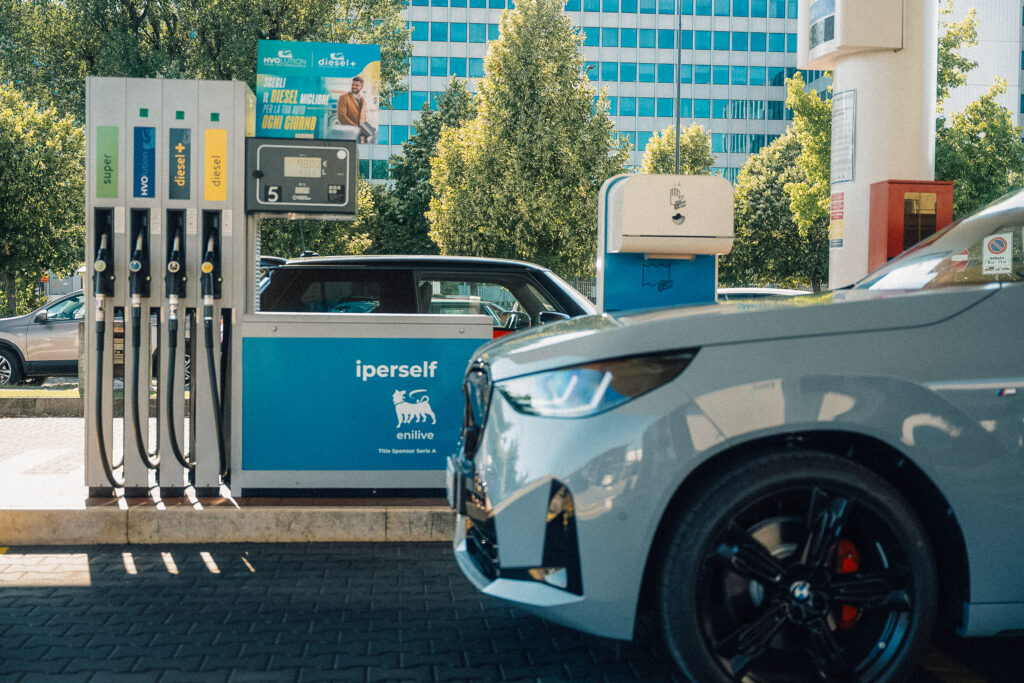
There is a tidy slice of engineering woven in, too. BMW is trialling a system that cross-checks refuelling data from each car against the fleet operator’s payment records. The upshot is full traceability, so every litre burned can be traced back to its source. Around 1,700 Enilive stations across the three countries already stock the fuel.
The wider picture is what makes this compelling. Europe has more than 250 million cars on its roads, and most will keep sipping liquid fuel for years yet. BMW’s argument is refreshingly pragmatic. Battery power is coming fast, but renewable diesel can shrink the carbon footprint of today’s fleet right now, and it asks for no new hardware at all.