 BMW.SG | BMW Singapore Owners Community The Ultimate BMW Community – Established Since 2001

The landscape of automotive manufacturing is undergoing a radical shift as BMW humanoid robots step onto the factory floor to assemble the new X3 crossover and other premium models. While heavy-duty, fixed mechanical arms have long been the backbone of stamping presses and paint shops, the physical limitations of static machinery are finally being bypassed. Munich’s latest “Physical AI” programme introduces fully articulated, bipedal and wheeled androids directly to the assembly line. This technological leap removes the immense physical strain from human workers whilst maintaining the absolute millimetre precision required for flawless chassis construction.
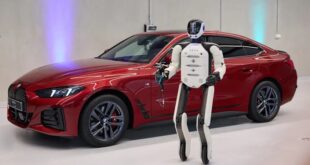
To prove this concept in a high-volume environment, the manufacturer recently concluded an extensive trial run with the Figure 02 unit at its sprawling Spartanburg facility in the United States. Tasked with handling raw sheet metal during the critical welding phases of the BMW X3, this highly advanced machine logged impressive operational hours. Over the course of the pilot, the robot successfully manoeuvred over 90,000 heavy metallic components into their exact welding fixtures, taking an estimated 9,600 steps per daily ten-hour shift. By contributing to the seamless production of 30,000 vehicles, this initial test definitively proved that autonomous physical AI can thrive outside a controlled laboratory and withstand the relentless cadence of modern vehicle production.
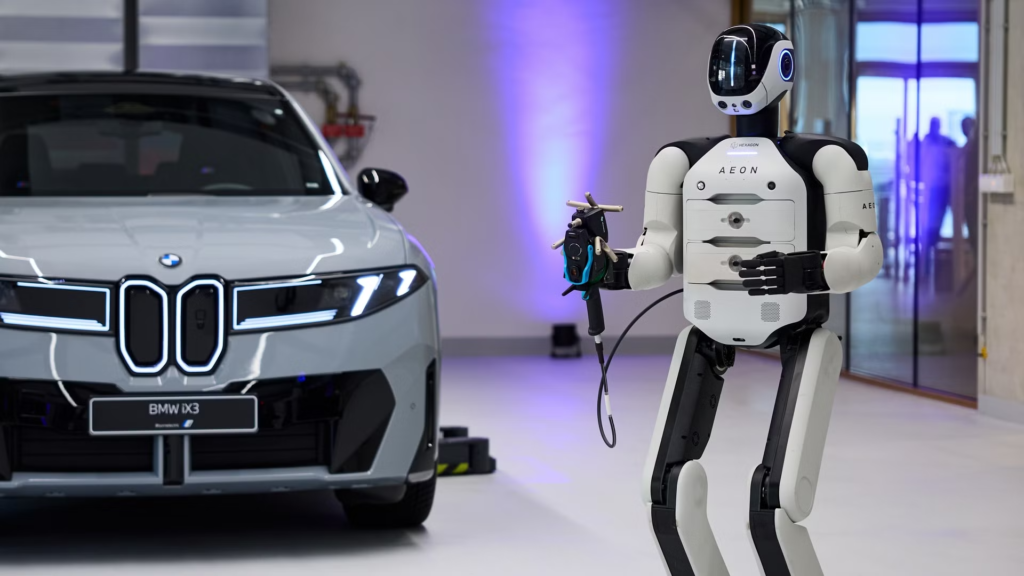
Building upon that transatlantic success, the initiative has now expanded to the Leipzig plant in Germany, partnering with software and sensor specialist Hexagon Robotics. Instead of the bipedal Figure 02, the European facility is deploying AEON—a highly sophisticated bot featuring articulated legs, rolling feet, and remarkably human-like hands. Integrated onto the shop floor late last year to map out its operational parameters, AEON is preparing for a rigorous testing phase this spring before full deployment in the summer. This rolling technician brings an entirely new level of mobility to the factory, gliding between workstations to deliver components and execute complex assembly manoeuvres without interrupting the flow of human traffic.

While the Spartanburg operative was limited to repetitive sheet metal placement, the mandate for AEON is significantly broader and far more intricate. Equipped with versatile grippers and advanced scanning tools, this mechanical co-worker is designed to tackle the demanding construction of high-voltage battery packs and delicate electronic drivetrains. These tasks demand surgical accuracy and absolute consistency, making them the perfect candidates for a machine driven by cold, calculated logic. By sharing the heavy lifting and taking over the most physically punishing duties, these physical AI agents will allow human technicians to focus on the nuanced craftsmanship required to build the 2 Series Gran Coupé and the all-electric Mini Countryman.
Ultimately, this strategic adoption of physical AI signals a new era for the Bavarian marque’s global production network. By delegating the heaviest, most repetitive mechanical labour to tireless automated assistants, the brand is ensuring that its assembly lines operate with unprecedented efficiency and ergonomic safety. Whether these silicon-driven operatives become a standard fixture across all manufacturing facilities remains to be seen, but the sheer capability demonstrated so far is undeniably impressive. As the industry races towards a highly electrified future, relying on intelligent androids to torque bolts and align body panels might just be the ultimate driving force behind the next generation of premium automobiles.