 BMW.SG | BMW Singapore Owners Community The Ultimate BMW Community – Established Since 2001

There is a specific kind of anxiety that comes with being a fan of “old” BMWs. When you spend your weekends with the mechanical honesty of oldtimers, the phrase “All-Electric Neue Klasse” can sound like a beautiful future or a quiet eulogy for everything we love about driving.

At the global launch of the new BMW i3, we sat down with Norman Wiebking, the Project Lead for the car, to find out if the “3” in i3 still stood for the values that saved the company sixty years ago.

Q: With the 800V architecture and the charging speeds, it feels like you’ve chased perfection. Was there any part of the car during development where you actually had to compromise to get here?
Norman Wiebking: I can say the i3 was part of our development from the very beginning of the Neue Klasse. Even though we started the rollout with the iX3, we knew the technologies, the powertrain, and the battery had to work for this car. It was necessary to take a huge step with the technology—integrating the battery directly into the body without an extra layer so the car stays low and keeps those classic proportions. To be honest, you can’t make a compromise with the 3 Series. It has a lot of heritage and a lot of fans. It has to be sporty, nice to look at, and perfect for daily use.

Q: It’s interesting that the iX3 was launched first. Some might say the i3 is actually the more “important” product for the brand’s soul. Why the wait?
Norman Wiebking: It is simply our launch sequence; we decided to bring the iX3 first, but we developed both very closely. My colleague, the project lead for the iX3, and I sit side-by-side. Every morning, we discuss how we can make the cars better. From a mindset perspective, they are very close together.
Q: How do you balance what the customers are asking for versus what BMW believes the experience should be?
Norman Wiebking: We stay in close contact with our customers. We take the feedback from the people who love and drive these cars, and that is what drives us. The decision to make the Neue Klasse so radical was because we knew range and charging power might be perceived as problems, and we wanted to make such a huge step that they wouldn’t be problems anymore.
Q: During your user research, what was the biggest surprise about how customers actually use the car?
Norman Wiebking: I was surprised by how much people value the “non-driving” time. In some regions, customers love to sit in the car while they wait for their children at sports or music practice—using the entertainment systems and watching movies. It became a future part of the development: making the environment nice and cosy for the time you do not drive. Especially while you charge—though you won’t have too much time to do many things, given the speed!

Q: How do you align so many teams, development, production, sales—around a single vision for a car this complex?
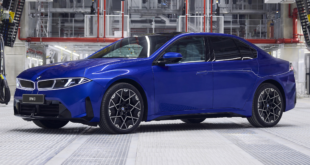
Norman Wiebking: We installed a new collaboration model. We have one area where colleagues from every department and our supplier network work together. We have stand-ups every morning. It’s not a step-by-step, sequential process anymore. For example, right now we are doing pre-production in the plant, and the development team is right there on the floor. If a problem comes up, we find a solution very fast.
Q: People often think of Neue Klasse as just a product, but it feels like a philosophy. What did that philosophy specifically bring to the i3 design?
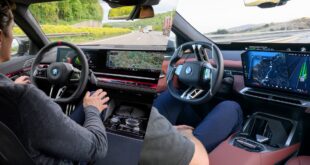
Norman Wiebking: It is a new era. We decided to make everything new. We took a new concept for the user interface, like the Panoramic Vision. When you drive, you see how the information in your vision matches the “Symbiotic Driver” system. It’s a 360-degree perfect match of technology and design.
Q: One thing that surprised us was the steering wheel, a four-spoke design. Why go that way instead of a traditional three-spoke?
Norman Wiebking: Because you no longer need to adjust the steering wheel to see the instrument cluster through the wheel. Since all the information is in the Panoramic Vision, you can adjust the wheel even lower for better ergonomics. It’s about feeling free. And if you don’t like it, the M Sport wheel with the traditional three-spoke design is still an option.


Q: What is your personal favourite design point on the new i3?
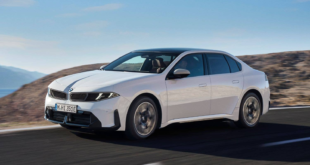
Norman Wiebking: The front. The combination of the light and the kidney grille, with all the technology, the radar and cameras, hidden behind. The team worked so hard to integrate it so you can’t see a square or a sensor disturbing the car. It’s completely behind the surface.
Q: Beyond performance, what defines a “great BMW experience” for you?
Norman Wiebking: Performance is just acceleration, that’s physics. But when you steer an electric car, that is where you see the difference. The car needs to give you feedback on the street behaviour, so you know your driving is right and precise. Our driving dynamics team worked incredibly hard on that steering behaviour.
Q: From the moment you decided on this direction to this first pre-production car, how long was the journey?
Norman Wiebking: About four years. We started the development of the Neue Klasse in 2020, and the i3 project specifically started in 2022. Two years later, we have the first result.
C&K: Last question. If we look at the whole history of the brand, what are your top three BMWs?
Norman Wiebking: (Laughs) The E30, the E46, and… the new i3.

The Takeaway
Talking to Norman, the biggest revelation wasn’t the 800V architecture or the hidden radar—it was the collapse of the traditional “step-by-step” corporate silos. The i3 exists in its current form because the engineers, designers, and management stopped working in sequences and started working in the same room every morning.
In an industry where “all-new” usually means “mostly updated,” the i3 feels like a genuine reset. By removing the dashboard cluster to fix steering ergonomics and integrating the battery into the floor to preserve the low-slung 3 Series silhouette, BMW has chosen technical difficulty over easy compromises. Whether you’re ready for the electric era or not, it’s clear that for Norman and his team, the 3 Series badge remains an engineering benchmark that cannot be faked with software alone.
The technology is a clean break from the past, but the discipline behind it is exactly what we’ve come to expect from BMW.