 BMW.SG | BMW Singapore Owners Community The Ultimate BMW Community – Established Since 2001

When you talk to Oliver Heilmer, you aren’t just talking about sketches. As the Head of Design for the Neue Klasse and BMW M, he is tasked with what he calls the “Third Big Bang”, a design shift as radical as the jump to the E30 or the E36. We sat down with him to deconstruct the “2.5 box” and find out why he is obsessing over the wheel arches of BMW’s core electric sedan.

Q: The press release calls the silhouette a “2.5 box.” I’m looking at it, and it looks like a classic 3-box. Where is the missing 0.5?
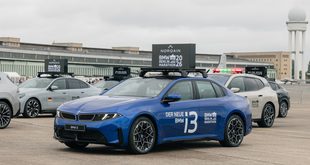
Oliver Heilmer: (Laughs) Technically, you aren’t wrong. It is a 3-box. But compared to our previous sedans, the proportions have shifted. Traditionally, the trunk was roughly two-thirds the length of the front. With the i3, the trunk is shorter. We call it “two and a half box” because the greenhouse remains so relevant while the rear overhang is pulled in.
Q: For a long time, rear-wheel drive BMWs had that unique “dash-to-axle” length. With the new i3, the gap between the wheel and the base of the A-pillar is… different. How do you win that proportion battle back?
OH: It was vital that the greenhouse stayed prominent. We kept the front overhang as short as possible, shorter than in the past. We also used a visual trick: a line that runs the full length of the car to visually extend it. Then there’s the surface treatment—crisp, sharp lines and muscular compositions around the wheels. If you look at the car from behind, the way it “arrives” is still very powerful.

Q: The bonnet seems higher than what we’re used to. Was that a compromise to fit the new Panoramic Vision display?
OH: Actually, the entire package is higher because of the battery. But the display helped us; it allowed us to create three layers of info: the road, the vision, and the dash. By lowering the dashboard surfaces, we achieved a more spacious, “airy” feeling, reminiscent of early BMWs where the dash was lower and more visible.
Q: Here’s a practical one, where is the tailgate release button now?
OH: You know the license plate? On the right side, you see the camera, and then just to the left of the camera is where you’ll find it.


Q: Looking at the side profile, you don’t have an engine in front anymore. Why can’t you use a super-low nose like the E46?
OH: I wish we could! But we have modern regulations, pedestrian safety and damper clearance. You need a certain height for energy absorption in a crash. Those “hard points” dictate the height regardless of what’s under the hood.

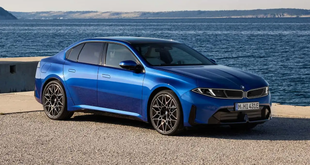
Q: The blue paint job has incredible shadowing and reflections. Was that an intentional move to hide the sensors?
OH: Always. We want the “flip” of the metallic flakes to be strong so the light moulds the body. But sensors are everywhere now, and we found out that metallic flakes actually disturb them. We then had to develop new flakes that are attractive to the eye but “invisible” to the radar. It was a massive innovation just for the colour development.


Q: Was there one specific design feature that generated the most arguments or discussion internally?
OH: The front. The front, for sure. (Laughs) Surprise! It’s always like that, but it’s nothing new for me. You can imagine the discussions, but internally, the front is where the most energy always goes.
Q: Emotionally, what do you want a customer to feel?
OH: I want them to feel something they might have felt with an old BMW. An instant personal connection—through the light, the sound, the sense. Instantly feeling “this is a BMW,” even if you can’t put your finger on why.
Q: Which car did you enjoy designing more: the iX3 or the i3?
OH: At the moment, the i3. Because of the lower centre of gravity, it enhances that BMW feeling even more.
Q: You mentioned those icons, E21 through E46. Did you look back at them for inspiration for the i3?
OH: All the time. Every one of those cars had its own character. We saw the original Neue Klasse as the first “Big Bang”, then the E36 as a massive shift where the trunk finally went up. We realised the Neue Klasse is the “Third Big Bang.” We even found old sketches from the original 60s Neue Klasse that had those wide, horizontal “chest” kidneys instead of vertical ones. We’re celebrating the fact that we are the only brand with an identity that iconic.
Q: By moving the sensors into a smooth grille, will this limit the design for the future?
OH: It’s a new environment. 50% of current BMW fronts are already dictated by sensors. It’s a challenge, but a beneficial one. We even moved the radar off-centre to protect the graphics. Technically, the easiest way is to just put it in the centre, but that’s a bit stupid for the design. So we moved it sideways for the front-driving systems.

Q: Is there a specific line on the i3 you keep coming back to?
OH: The rear wheel arch area. It has that sharp sedan line that lowers the visual centre of gravity. That arch is very close to a current M car.
Q: We can tell you’re an M designer. It looks a bit like the M2’s hips.
OH: (Smiles) Exactly. And that’s on the core model. Imagine what we can do with the M model.
Q: Last question: How far into the future are you looking right now in terms of design?
OH: Depending on the project, we are currently looking at 2030 to 2033.

The Takeaway
Oliver Heilmer is playing a high-stakes game of “connect the dots” between 1962 and 2033. What we took away from our conversation is that the i3 isn’t trying to copy the past; it’s trying to evoke the feeling of the past using the uncompromising constraints of the future.
The most revealing moment was Oliver’s admission that the front end remains the primary theatre of war for internal arguments. It’s a reminder that BMW design isn’t a consensus-driven committee; it’s a high-friction process of protecting what makes a BMW recognisable. When we realised they spent the time and effort developing specific metallic paint flakes just so a sensor could “see” through a beautiful colour, we started to understand that the Neue Klasse isn’t a departure, it’s an obsession.