 BMW.SG | BMW Singapore Owners Community The Ultimate BMW Community – Established Since 2001

The 3 Series has always been the barometer for BMW’s health. To reinvent it as an all-electric machine under the Neue Klasse banner wasn’t just a product launch; it was a total restructuring of how a 100-year-old company thinks, builds, and decides.
We sat down with Mike Reichelt, Head of Neue Klasse BMW, to discuss the “Heart of Joy,” the absence of the iDrive controller, and why the board of management had to start acting like a tech startup.

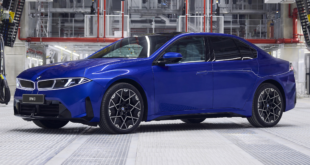
Q: Now that we’ve seen the car, our first impression is that it’s nicely shaped, the stance, the flares, and the way everything is pushed out to the sides. It looks almost like an “M” car with the width of those shoulders. What is your personal favourite part?
Mike Reichelt: There isn’t just one, because we did everything entirely new. When you come to the car, you see the design in a completely new, monolithic way. I call it “New Clarity.” But I love the BMW Panoramic Vision. Using the windscreen as a projection area rather than sitting behind “display walls” gives the driver perfect orientation. It fits the 3 Series soul perfectly.
Q: You’ve mentioned the “Symbiotic Driver” and the “Heart of Joy.” How does that translate to the actual driving experience, especially regarding weight?
MR: We don’t speak about weight today, but the car is heavier than two tons. However, the sensation—the whole package—is unbelievable. The “Heart of Joy” is our new computing power; it’s ten times faster. In the i3, which has the lowest centre of gravity, it feels agile and precise. We tested with journalists in Sweden on ice and snow; you can have fun drifting the car, but it feels safe and trusted. Software without perfect hardware is nothing, so we integrated the battery pack into the body for maximum stiffness. You can shift torque completely freely and seamlessly between front and rear axles. It feels like the car knows where you want to go the moment you touch the steering wheel.

Q: What is the biggest “bet” BMW is making with Neue Klasse that a customer might not immediately notice?
MR: One is our Soft Stop function. Thanks to the “Heart of Joy,” more than 95% of all braking is only recuperation. You come to a standstill at a traffic light, and you feel nothing—it’s magical. Then there’s the “Magic Flap”, the car knows you’re approaching with your phone and prepares the charging flap. And of course, bidirectional charging. In Germany, we have a pilot where the energy provider uses the battery pack as a power bank, which could save a customer up to €720 a year.
Q: We’re talking about the smaller BMWs now, but will this design and tech roll out to the larger, luxury cars like the 7 Series?
MR: Once we saw how big the step was, we decided to roll out the design language and technology to the whole BMW portfolio, 40 new models and updates by the end of next year. Every model has its own character, but every customer gets the latest digital content. We are uncompromisingly optimising Neue Klasse for full electric, using 800V architecture and cell-to-pack battery integration to guarantee the best interior space, but we need the scaling to bring electric cars to a price level comparable with ICE cars.

Q: What’s the boldest decision with the i3 that people might question at first?
MR: Panoramic Vision. We are the inventors of the iDrive controller. To say “No, now touch, and voice are the main things” and to move away from the iDrive wheel was a huge step. I remember sitting in a mockup when the system started up for the first time, I had “ghostbumps.” “Heart of Joy” was the second boldest; we knew the theoretical potential, but driving it on ice confirmed it was better than we even believed ourselves. When the team feels the potential is higher than they thought at the beginning, that’s the coolest way.


Q: In a project this massive, what changed the most from the original vision?
MR: The User Experience (UX). We had to be careful because our legacy is the iDrive system. There was an intensive internal discussion because no one had gone in the direction of Panoramic Vision before. We eventually realised that a “spaceless” interior without a display wall felt natural. Now we see other OEMs trying to copy it, which is the best feedback.
Q: Was there any particularly difficult UX feature that you had to really push through?
MR: The customisation. The idea to “Drag and Drop” particles from the central display to the Panoramic Vision came during the development process—it wasn’t there at the beginning. We also had to solve technical hurdles, like ensuring the projection works with polarised sunglasses and the specific “layer” inside the windshield to guarantee high precision. The real picture is actually one meter in front of you.

Q: Do you think customers are pushing BMW, or is BMW leading the customers?
MR: We hear from customers that there is now “no more reason” not to switch to an EV. We’ve solved the pain points—range and charging speed—and replaced them with advantages.
Q: I’m interested in the decision-making. How do you manage a project where everything is being changed at once? Was it one “Sprint” every six weeks?
MR: Yes, more or less. We reduced the development time, yet did more than ever. Every six weeks, the Board of Management would come to our project area. I would say, “Today we have these five decisions,” and we’d discuss. We never asked the board “what to do”, we proposed directions and discussed them together. This trust was a booster.
C&K: Was the Board difficult to convince?
MR: The decision was made in the middle of the Corona pandemic, which sounds crazy looking back. The question was never why, that was clear,it was always what is the best way. We even had the board drive the first prototypes together. Normally, the board only drives a car when everything is perfect. Here, they were part of the story from the early phase.

Throughout my conversations, I kept waiting for someone to mention the “finality” of the i3, the moment the design was frozen or the software was “finished.” But talking to Mike Reichelt, I realised that the Neue Klasse isn’t a destination; it’s a new way of existing.
As a UI/UX designer by profession, I found the most radical thing about our interview wasn’t about the 800V architecture or the fact that the iDrive wheel is gone; it’s the death of the “sequential” corporate model. By dragging the Board of Management onto the ice in Sweden to drive unpolished prototypes and moving to a six-week “sprint” cycle, Reichelt hasn’t just built a new car; he has turned a legacy ship into a fleet of agile speedboats.
For those of us who grew up with the analogue certainty of a 2002 or an E30, the “Heart of Joy” is probably a difficult pill to swallow until you realise it’s the only way to save what we love. By consolidating the car’s “brain” into a single, ten-times-faster super-processor, BMW has stopped trying to make an electric car that acts like a BMW and has finally built an architecture that is a BMW at its core.