 BMW.SG | BMW Singapore Owners Community The Ultimate BMW Community – Established Since 2001

Hot on the heels of its world premiere here in Munich, the new BMW i3 doesn’t just arrive, it lands with a palpable weight behind it.

Not just because it’s the second act of the Neue Klasse, but because having spent the past few days tracing the roots of this car, from BMW Group Classic to the people who shaped it, you start to realise this isn’t just a clean-sheet rethink.
If anything, it’s a careful recalibration.


Because for all the talk of a “new era”, the BMW 3 Series has always been about one thing: Freude Am Fahren. And translating that into an electric sedan was never going to be as simple as swapping drivetrains.
In fact, speaking to the proud team behind the car, there was a quiet admission that this was the one they couldn’t get wrong.
Not because of what it needed to become.
But because of what it needed to remain.
Looking back to move forward
One of the more interesting threads that kept surfacing through the interviews was this idea of looking backwards, not for nostalgia, but for clarity.

There was talk of earlier 3 Series generations, not explicitly named, but clearly referenced, in terms of proportion, restraint, and intent. Cars where the design wasn’t trying to say everything at once.


Standing in front of the new i3, that influence is immediately apparent.


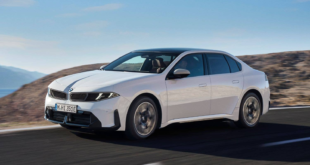
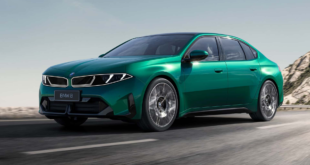
The proportions feel… familiar. A proper stance, short overhangs, and that slight rearward bias in the cabin. BMW calls it a “2.5-box design,” but in reality, it’s closer to a modern distillation of the classic sports sedan silhouette. Only cleaner. Tighter. More resolved.


Even the surfacing reflects that mindset. There’s a noticeable reduction in visual noise, fewer lines, and more tension. As its designer describes it, “letting the form breathe again.”
And that restraint? It’s what gives the car presence.


Up front, the iconic face has been reinterpreted rather than reinvented. The grille and headlights merge into a single graphic element, housing sensors, lighting, and identity all at once into a very bold visage. The familiar four-eyed layout is still there, just abstracted into something contemporary and striking, a form unmistakably BMW. Expect other manufacturers to follow Munich’s lead.


Along the rear, there’s a familiar sense of restraint. Horizontal light elements, a strong shoulder line, and a clean surface treatment all come together in a way that feels quietly reminiscent of earlier 3s, but interpreted for the future.


It’s not trying to be retro.
But it knows exactly where it came from.
The engineering beneath the restraint
If the design is about reduction, the engineering underneath tells a very different story.


The new i3 sits on BMW’s sixth-generation eDrive platform, built around an 800-volt architecture, something that immediately puts it at the sharper end of the segment.
The battery itself has been completely rethought. Instead of traditional modules, BMW now uses round cells integrated directly into the pack, a cell-to-pack design that improves energy density while allowing for a flatter structure. The result is not just more range, but better packaging and a lower centre of gravity.

And you feel that in the way the car visually sits, hunkered down and almost hugging the ground.
In its launch form, the i3 50 xDrive runs a dual-motor setup, an electrically excited synchronous motor at the rear, paired with an asynchronous unit at the front. Together, they deliver 345 kW and 645 Nm.
But again, the numbers almost feel secondary.
Because what BMW seems more interested in is how that performance is delivered. The combination of motor types isn’t just about efficiency; it’s about maintaining consistent power delivery across different driving conditions, reducing losses, and keeping the response predictable.
That word “predictable” comes up a lot.
The Heart of Software
Then there’s the software side of things.
The i3 introduces a completely new electronics architecture, built around four high-performance “superbrains” handling everything from driving dynamics to infotainment. Processing power is said to be up to 20 times higher than before, enabling faster responses and more seamless integration between systems.

At the centre of it all sits the so-called “Heart of Joy”.
Sitting under the A-Pillar, and looking nothing like the above marketing image, the i3’s heart is responsible for integrating drive, braking, steering and energy recuperation, and processes inputs significantly faster than previous systems. On paper, it sounds like just another control unit. But in conversation, it was framed very differently. Not as a performance feature, but as something that shapes feel and emotion.
Because when everything is reacting faster, you need fewer corrections. Fewer interruptions. Allowing the car to flow more naturally.

Even the braking follows that philosophy. Most deceleration is handled through regeneration, with the traditional brakes stepping in only when needed. The transition is supposedly so seamless and unreal that, more often than not, you don’t think about it at all. Something all the journalists who have driven its iX3 sibling swear by.
And that seems to be the point.
Range, charging, and something more
Of course, this is still an EV, and the i3 doesn’t hold back here either.

BMW is quoting up to 900 kilometres of range, with DC fast charging speeds of up to 400 kW. In the right conditions, that translates to roughly 400 kilometres of range added in around 10 minutes.
But perhaps more interesting is what the car can do beyond driving.
With bidirectional charging, the i3 becomes part of a wider energy ecosystem, capable of powering external devices, feeding energy back into a home, or even interacting with the grid. It’s a subtle shift, but an important one.
The car is no longer just a consumer of energy.
It’s becoming a participant.
For those wondering about the development of solid-state batteries, BMW and its partners are still actively working to bring the technology to life. But with current-generation batteries already achieving range figures that would have seemed ambitious just a few years ago, and with ongoing geopolitical pressures around raw materials, there’s a sense that the pressure to rush the next breakthrough just isn’t quite the same.
Still a driver’s car—by design
For all the technological leaps, BMW’s approach to driver assistance feels notably restrained.

Rather than chasing full autonomy, the focus remains on what they call “Symbiotic Drive”, systems designed to work with the driver, not replace them. The idea isn’t to remove control, but to support it.

Inside, the rethink is less about adding more giant screens and more about rethinking where/what information belongs. The new Panoramic iDrive projection display stretches across the windscreen, placing key data directly within the driver’s natural line of sight, while a free-standing central display handles personalisation and everything else.


It’s a subtle shift, but an important one, less about spectacle, more about clarity. It might not be perfect, and this is something we’ve yet to properly test, but in many ways, it mirrors the exterior: reduced, intentional, and focused on what actually matters.
And that philosophy feels increasingly intentional.
Because in an industry that’s rapidly converging around the same ideas, bigger screens, more automation, faster numbers, the new i3 feels like BMW quietly pulling things back into focus.
Not rejecting progress.
Just refining it.
Built where it all began
There’s also something fitting about where all of this comes together.

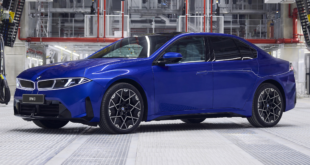
Production of the new i3 will take place right here in Munich, at a plant that’s been transformed for the Neue Klasse era, marking a significant shift toward fully electric production in the years ahead.
It’s a full-circle moment of sorts.

A car rooted in decades of history, built in the same city where much of that history was written, just reinterpreted for a very different future.
So where does that leave the 3 Series?
This isn’t just the next 3 Series. It’s BMW re-centring the conversation, away from numbers, and back to emotion.

And having now seen the journey behind it, from archive to studio, from sketches to something you can finally stand in front of, you start to understand what they were trying to preserve all along.
Not the shape.
Not the drivetrain.
But the idea.
And if this is what the Neue Klasse looks like this early on, you get the sense they’re only just getting started.
And having caught a very brief, very off-the-record glimpse of what comes next… Let’s just say this Neue story is just getting started. And yes, a touring has been confirmed, and from what we hear, the M Performance is coming very soon.