 BMW.SG | BMW Singapore Owners Community The Ultimate BMW Community – Established Since 2001

Car makers spend countless hours chasing kilograms from body panels, wheels and suspension, yet one of the chunkiest components in the cabin often slips under the radar: the seat. It’s easy to forget what you’re perched on until you’ve tried hauling one out of a stripped interior. Beneath the trim sits a dense mix of structure, electrics, comfort hardware and safety kit, all adding up to a surprisingly weighty package.
A modern seat is a small engineering project in its own right. It needs a rigid base and backrest frame that can take crash loads, stay slim enough to preserve cabin space, and still deliver long-distance comfort. Add mechanisms for recline, height adjustment and lumbar support, plus heating, ventilation and the wiring to run it all, and you begin to see why seats can feel like dead weight when you’re chasing sharper responses and better efficiency.
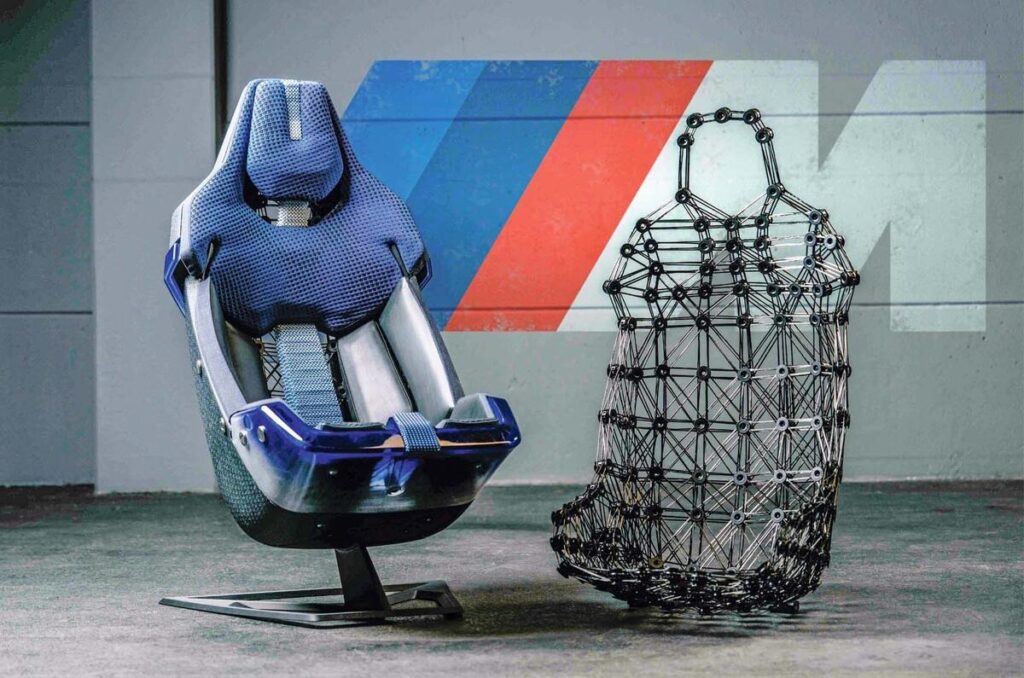
That’s why BMW M has turned the spotlight on a component most people never think about. Its latest concept, the M Visionary Materials seat, is less about flashy styling and more about rethinking how the underlying structure is made. Alongside the push for recycled and plant-based inputs and alternatives to traditional leather, the real talking point is how the seat’s skeleton is formed in the first place.
Instead of relying on conventional metal-heavy construction, the concept uses robotic filament winding: a process that wraps resin-infused fibres around key mounting points to build strength precisely where it’s needed. The result is a structure designed to be rigid and crash-capable while dramatically reducing mass, further helped by cutting down the number of individual parts. In the world of performance cars, that’s the sort of detail that can sharpen the whole driving experience before you’ve even touched the throttle.