 BMW.SG | BMW Singapore Owners Community The Ultimate BMW Community – Established Since 2001

The BMW M2 is the sharp end of a compact lineup that Munich has quietly loaded with talent. Beneath it sits a spread of crossovers, saloons and coupes that all wear the roundel without asking buyers to shift up into the executive class. Two decades ago, a small German premium car usually meant a stripped cabin and a wheezy engine. That era is long dead. Today the smallest BMWs run proper turbocharged hardware, adaptive damping and cabins lifted straight from the bigger cars.

Start with the X1, the entry point to the utility range. Its reworked 2.0-litre turbo four sends 241 horsepower and 295 lb-ft through a seven-speed dual-clutch gearbox to all four wheels. The cabin is dominated by the Curved Display and the latest iDrive software, while boot space and rear legroom shame the footprint. Want more attitude? The X1 M35i squeezes 312 horsepower from the same block, adds adaptive M suspension, bigger M Sport brakes and quad tailpipes, and cracks 60 mph in 5.2 seconds. The X2 takes that same mechanical package and drapes it in a fastback roofline borrowed from the X4 and X6. Rear headroom suffers. Kerb appeal does not.
The 2 Series splits into two very different characters. The 228 Gran Coupe is a subcompact saloon aimed squarely at the Mercedes CLA, with the familiar 241-horsepower four, front-wheel drive or xDrive, and a well-insulated cabin trimmed in genuinely good materials. It is a polished urban commuter rather than a back-road weapon, because the transverse engine layout means none of that classic rear-drive balance. The M235 xDrive Gran Coupe fixes the pace if not the physics, with 312 horsepower, a front limited-slip differential to blunt understeer and a 4.7-second sprint to 60 mph.

For drivers who want the old recipe intact, the 2 Series Coupe delivers. It rides on a shortened CLAR platform, which keeps the engine longitudinal and the drive going rearwards. The 230i uses a 255-horsepower turbo four, a superbly calibrated ZF eight-speed automatic and near-perfect 50:50 weight distribution. Steering is clean, the ride stays supple, and the whole car feels neutral where its front-drive relatives feel stiff and busy. Then there is the M240i, which drops the B58 3.0-litre straight-six into the same shell for 382 horsepower, 369 lb-ft and a 4.1-second run to 60 mph. It pulls to the redline with a hard mechanical howl no four-cylinder can fake, yet still swallows motorway miles in comfort.
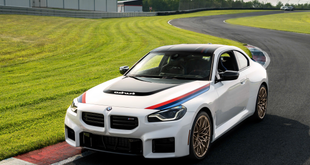
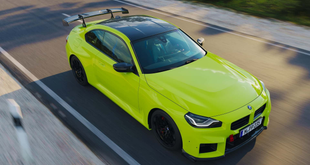
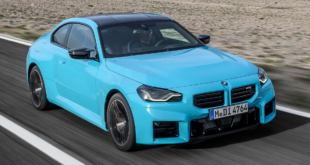
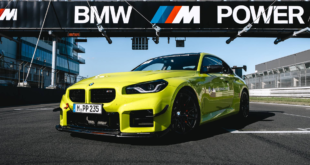
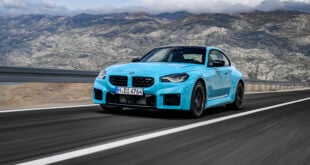
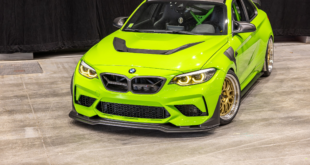
Which raises the obvious question, and the M2 answers it emphatically. The 2027 car borrows the twin-turbocharged S58 straight-six from the M3 and M4 and turns it up to 473 horsepower with 443 lb-ft. Rear-drive buyers get 4.1 seconds to 60 mph. Choose the new M xDrive system, offered on the M2 for the first time, and that drops to 3.6 seconds. Wide arches, functional aero and staggered wheels make the intent obvious before it moves, and the optional carbon buckets pin you in place when the lateral loads arrive. Loud, stiff and utterly unapologetic, the M2 remains proof that a small BMW can still be the most serious one in the showroom.