 BMW.SG | BMW Singapore Owners Community The Ultimate BMW Community – Established Since 2001

nd then came the lightning.
If day one’s weather was a trial, day two was an outright deluge. The storm that had been brewing overnight didn’t simply continue; it escalated into an unrelenting Mediterranean tempest.

Flash after flash of lightning illuminated the dark Provençal skyline through the hotel window all through the night, accompanied by the endless, heavy drumming of thunder and rain. By morning, conditions had deteriorated significantly, with Météo-France placing the region under an Orange weather alert as torrents of water turned the winding B-roads around Aix-en-Provence into rushing, muddy streams.

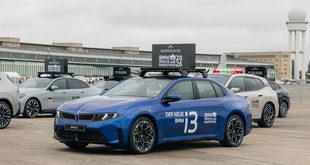
Things got so severe on the morning of day two, when we were scheduled to collect the keys to the all-electric i3 50 xDrive, that the entire driving session was placed on hold. It came within a whisker of being cancelled altogether. Behind the scenes, the event team scrambled to map out a heavily shortened emergency route just so we could get out on tarmac for a brief window.
Truth be told, I wasn’t stepping out to the car bracing for some classic “EV compromise”, a heavy, soulless appliance hiding behind silent straight-line speed. Far from it. What made day two so compelling for me was sheer, unadulterated curiosity. With the M350, we all roughly knew what we were getting into; as a high-powered petrol-powered 3 Series, its mechanical recipe was familiar and predictable.

The i3, however, was a whole new voyage of discovery.
The Cockpit & The ‘Heart of Joy’
Climbing inside, the i3’s cabin architecture feels like a massive leap into a new digital era, taking its lead straight from the groundbreaking iX3. Taking centre stage is the full-width BMW Panoramic Vision projection running across the entire base of the windshield, complemented by an ultra-crisp 17.9-inch central touchscreen running Operating System X.

Crucially, BMW’s designers angled that central display three degrees more toward the driver. Sitting in the low-slung driver’s seat, that subtle tilt immediately triggers a wave of nostalgia for iconic driver-centric cabins of the past like the E36 and E46, where the entire centre console wrapped tightly around the “pilot.”

While there have been media gripes regarding the digital iDrive interface—most notably the loss of physical switchgear for the air vent controls—everything felt surprisingly logical in practice. Working in a tech-adjacent field when I’m not behind the wheel, I found navigating the tile layout and QuickSelect menus completely intuitive. Furthermore, BMW has already updated OS X with more presets for the Panoramic Vision display, a clear sign of how rapidly they are iterating software for the Neue Klasse era.


Inside the cockpit, it was remarkably similar in ambience and usability dynamics between the i3 and the M350 xDrive. Sitting behind the wheel, the seating position, structural sightlines, and fundamental cabin texture felt almost identical. It was only when you looked down or pressed the starter that the illusion fractured: where the M350 treats your tactile senses to faceted, light-refracting crystal glass controls and a creamy B58 engine note, the i3 instead remains a serene, high-tech sanctuary.

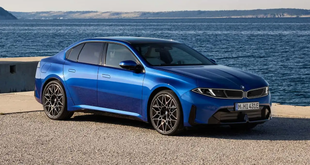
From an exterior perspective, this visual split is something that comes up constantly in conversations, often fueled by the optical trickery of their physical dimensions. At first glance, everyone swears the petrol M350 is a substantially longer car, but the tape measure tells a completely different story: the M350 measures 4,765 mm in length, while the i3 sits at 4,760 mm, a negligible difference of just 5 millimetres.
Where they truly diverge is in how those dimensions are distributed. To accommodate the long B58 six-cylinder up front, the petrol car stretches its dash-to-axle ratio and caps it with a lower roofline (1,455 mm). The dedicated electric architecture of the i3, by contrast, spreads its wheels further to the corners for a longer 2,897 mm wheelbase (versus 2,860 mm in the ICE car) and stands slightly taller at 1,480 mm.


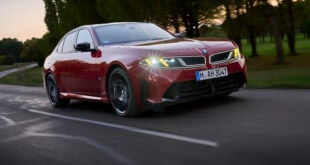
Yet to my eyes, the i3 carries the Neue Klasse design language better. The cab-forward profile gives it a cleaner, more modern visual balance, with a tauter tension in its body lines that brings out the flared wheel arches far more prominently on the road.

Underneath the skin, the i3 debuts BMW’s 6th-generation eDrive with a full 800-volt electrical architecture capable of peak DC fast-charging up to a staggering 400 kW. On paper, the i3 50 xDrive’s dual electric motors pump out 469 horsepower and 645 Nm of torque, actually eclipsing the 443 hp and 580 Nm of the six-cylinder M350.
And then there’s the dynamic brain tucked away under the right-hand A-pillar: BMW’s new Heart of Joy central high-performance computer. Processing dynamic chassis control, wheel slip, and torque vectoring ten times faster than any traditional ECU architecture, perfect for rain-soaked French asphalt.


Because of the last-minute emergency route diversion, we didn’t have the benefit of the integrated BMW 3D navigation system that had been pre-loaded the day before. Instead, we had to rely on a hastily mounted phone running Google Maps, which promptly directed us straight off the main road and into quite possibly the tightest, narrowest French village lane I have ever encountered in my life! Gingerly squeezing BMW’s brand-new baby past stone walls and parked hatchbacks with mere millimetres to spare in torrential rain certainly set my pulse racing.
Once back out on the open road, even with a severely curtailed drive, the car’s underlying talent shone through. On uneven surfaces, ride composure was rarely compromised; the chassis felt rock-solid, soaking up sharp compressions while keeping body motion strictly tied down. The steering was quick, direct, and razor-sharp, responding to directional changes as eagerly as we dared to push on slick, rain-soaked tarmac.
Contrastingly, where the petrol M350 relies on a rigidly braced front strut tower and steering box for a raw, physical front-axle bite, the i3 uses a digitally managed variable rack to mask front-motor inertia. As someone accustomed to unassisted, vintage steering boxes, I did find myself wishing for an even more intense setting with a touch more feedback through the rim.


Yet, surprisingly, I actually found the ride quality in the i3 to be better than in the M350 xDrive. Beyond positioning, with the M350 acting as the firm, performance flagship and the i3 50 xDrive serving as a mid-tier offering—the secret lies in structural execution. The Neue Klasse i3 utilises a “Pack-to-Open-Body” design, where the floor-mounted battery casing forms an integral, structural stress member of the lower chassis. That immense structural rigidity allowed engineers to run slightly softer damper rates without sacrificing an ounce of body control, soaking up broken French asphalt while keeping the low centre of gravity pinned near the road.

While the severe weather did us no favours and severely limited our chance to dive deeper into the i3’s more playful nature on dry, open bends, its steadfast high-speed stability and instant composure left a lasting impression. In fact, that was the most intriguing part of the entire experience: while we knew exactly what we were getting into with the M350, stepping out of the i3 left me with a distinct, lingering feeling that there is still a massive well of dynamic depth waiting to be uncovered beneath its surface.
Equally impressive were its low-speed road manners. BMW introduced a system called Soft-Stop on the i3. Traditional EVs almost always suffer from an awkward handoff when regenerative braking hands over to physical friction pads. But in the i3, the single-pedal regeneration is so natural and linear that the dual electric motors handle deceleration smoothly down to a complete standstill without a single mechanical shudder.


Practicality-wise, second-row legroom and headroom remain generous thanks to that stretched 2,897 mm wheelbase, though there is one subtle packaging caveat for rear passengers. Because the thick Gen6 battery pack sits beneath the cabin floor, the i3 features a slightly raised rear floor compared to the ICE variant. While headroom isn’t compromised, the elevated floor forces your knees into a slightly higher, slightly less natural seating angle—a minor ergonomic compromise in an otherwise spacious rear cabin. Boot capacity stands at a solid 420 litres, supplemented by a clever 31-litre front frunk for stowing wet charging cables.
The Reichelt Confession & The Final Choice
By the end of the second day, after stepping out of the i3 and wrapping up our test runs, I sat in the lounge with a warm coffee, genuinely stunned. Despite starting out with a massive initial bias toward the M350, even on a short drive, I found myself really enjoying being behind the wheel of the i3. As an everyday machine, picking the combustion car over the electric one was turning out to be an impossibly tough call.

Even among our crew of journalists, opinions were deeply split; some stood firmly by the petrol M350, while others leaned toward the i3.
That was when I bumped into Dr Mike Reichelt, Head of Neue Klasse, for an informal, off-the-cuff chat.
Seeing my stumped expression, Mike grinned and let me in on a deliberate choice made during early development workshops. He admitted that the engineering and design teams had set a very specific, ambitious benchmark: to make choosing between the combustion 3 Series and the electric i3 nearly impossible. They didn’t want the EV to feel like a soulless appliance, nor did they want the ICE model to feel like a legacy compromise. They wanted both models to represent peak driver engagement, leaving prospective owners genuinely agonising over which set of keys to take home.


After driving both back-to-back, I found myself thinking more and more about the i3. I was very, very close to tipping my favour toward the EV—until I stepped back and realised I was evaluating it through the lens of a collector who already had a classic driver’s car sitting in the garage.
If I had to own just one car, or if I had to pick a single machine to charge up a magnificent Japanese touge pass on a late night, I would still pick the petrol M350 xDrive. It was a conclusion that matched what I had predicted before flying to France. But I had no idea the decision was going to be that close.
Thinking back to my 1974 2002 sitting back in Singapore, I realised that Freude am Fahren isn’t strictly bound to gasoline, exhaust notes, or carburettors. Instead, perhaps, it’s the fundamental feeling, that instant, connected harmony when a chassis responds to your inputs with eager agility, total composure, and absolute clarity.

As an automotive dinosaur who flew to France ready to hand the victory exclusively to petrol, I had to tip my hat to Mike and his team. They set out to engineer an impossible dilemma, and they got it spot on.