 BMW.SG | BMW Singapore Owners Community The Ultimate BMW Community – Established Since 2001

5:00 AM. Karuizawa is still entirely asleep.
Outside, the air is cold enough to make your breath fog against the driver’s window. Morning mist hangs low over the larch trees, swallowing the timber verandas and quiet streets in a thick, bluish haze.

This was the serene alpine sanctuary we arrived at in Part 1, but this morning, it serves as the launching pad for a much darker, colder pilgrimage. To slice through one of the most technical mountain passes in Asia without getting trapped behind delivery trucks or tour buses, you have to beat the sun.
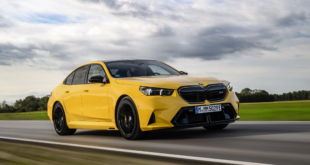
I press the red start button on the G99 M5 Touring.

In most high-performance cars, a cold start at 5:00 AM is an exercise in public nuisance. But with the car primed in ELECTRIC Mode, the G99 simply hums to life in total silence.
Rolling out onto Route 18, the battery powers the long-roof estate past dark shopfronts and slumbering villas without making a sound. It feels stealthy, a 727-horsepower weapon slipping through the mist like a ghost, heading toward the eastern edge of the plateau where the mountain suddenly drops away into Gunma.
The Real-Life Origin: The Ghost of “Dorikin”
Ask any casual car enthusiast about Initial D, and they will immediately point to Mount Haruna, immortalized as Mt. Akina, the fictional home turf of Takumi Fujiwara’s white AE86. Akina became the pop-culture icon, the holy grail for tourists and manga fans worldwide.

But those who know the history understand a deeper truth: Usui Pass is the real-world origin of it all.
Long before Shuichi Shigeno ever put pen to paper, a young gas station attendant named Keiichi Tsuchiya grew up in nearby Tomi. Unable to afford circuit track days or fresh tires, Tsuchiya adopted Usui Pass as his personal classroom. To conserve rubber, he would head out in the dead of night during winter frosts, heavy rainstorms, and dense mountain fogs. On these damp, mossy corners, he learned how to balance an underpowered KP61 Starlet and later an AE86 Trueno using pure momentum and weight transfer. Some say he still holds the course record on Usui driving an NSX-R.


In 1987, Tsuchiya teamed up with Option magazine to film Pluspy, the bootleg VHS tape featuring him pitching his AE86 completely sideways through Usui’s narrow hairpins inches from steel guardrails. The tape went viral among Japanese petrolheads, virtually inventing modern drifting as a recognized art form. It also got Tsuchiya’s official racing license suspended by the JAF, instantly turning him into an outlaw folk hero: the Dorikin (Drift King).

When Shigeno created Initial D, he brought Tsuchiya on as the official technical consultant. Takumi’s driving style on Akina wasn’t fiction; it was a direct carbon copy of Tsuchiya’s real-world techniques forged right here on Usui’s 184 hairpins. Akina was the stage, but Usui was the source code.
The Mass vs. The Mountain
Before throwing a long-roof estate into a narrow, damp alpine descent, I had to reconcile what this machine was physically.

Standing beside the G99 in the cold morning air, its footprint is significant. Stretching over 5 meters in length, nearly 2 meters wide, and weighing in at 2,475 kg. Figures that, on paper, feels utterly wrong for the narrow, twisting asphalt of this classic Japanese touge.

That mass comes from a complex dual personality. Beneath the sculpted bonnet sits a twin-turbo V8, backed up by an electric motor tucked inside the transmission and a battery pack lined under the floor. Together, they generate a colossal 727 horsepower an almost colossal 1,000 Nm of torque.
Looking down into the dark, misty canopy of Usui Pass, the car felt almost alien. I wasn’t sitting in a lightweight, analogue sports car like Tsuchiya’s AE86; I was piloting a high-tech fortress. The question burning in my mind as the morning fog swirled off the bonnet was simple: could all this electronic trickery preserve the raw romance of a proper touge run, or would two and a half tonnes of German engineering simply overwhelm the road?
184 Hairpins: The Relentless Downhill Attack
Crossing the border sign out of Nagano into Gunma, the yellow hairpin signs start counting down from Corner 184. I thumb the red M2 button on the steering wheel. It’s game on.

The quiet EV cruiser vanishes. The exhaust valves snap open, the twin-turbo V8 awakens with a deep, sonorous rumble, and the whole car tautens. As you hard-brake into corners and lift off the throttle, the system rewards you with great big, explosive backfires on the overrun, gunshot crackles echoing off the ancient stone walls and dense canopy.

On paper, you know there are 184 hairpins. But nothing prepares you for the sheer, utterly relentless rhythm of Old Usui in the flesh. It doesn’t offer a single second of respite, just a continuous, claustrophobic barrage of damp apexes, off-camber drops, and blind exits framed by mossy stone walls and unforgiving volcanic rock.

Diving down Old Usui, the G99 manages to mask its mass with uncanny agility. Pitching it into the infamous C-121 hairpin, the rear-wheel steering quietly steps the back end around, making this long-roof rotate through tight turns like a car half its size.


The way it exits these tight bends is where the all-wheel-drive system reveals its real genius. On damp, dew-slick tarmac, 727 horsepower usually means spinning into the guardrail. But here, you haul the wagon down on the carbon ceramics, apex, and pin the throttle, and the car simply claws into the slick asphalt. The instant electric torque punches you out of the turn before the turbos even spool, shooting this massive long-roof out of hairpin exits with insane, almost physics-defying speed.

It carries ridiculous momentum through the bends, changing direction with aplomb and barely a murmur of complaint. It is an amazingly capable machine, one that rapidly makes you feel like the car’s physical limits far exceed your own driving abilities and gusto.

Yet, out here on the tarmac, the drive remains an intensely human experience. Driving it fast downhill demands a level of mental dexterity and razor-sharp concentration that becomes physically and mentally exhausting. Truthfully, there were some genuinely frightening moments. When you’re pitching a 727-horsepower wagon into hairpin after hairpin without pause, the relentless intensity plays tricks on your senses. Your brain is working overtime calculating entry speeds on dew-slick asphalt and managing weight transfer, all while mossy stone walls blur past just inches from your side mirrors.
Monuments in the Mist: Megane-bashi
Midway down the pass, around Corner 100, the oppressive tree canopy suddenly splits open to reveal one of the most awe-inspiring structures in all of rural Japan: Megane-bashi (The Glasses Bridge).

I pulled the M5 onto the gravel shoulder to let the hot carbon-ceramic brakes breathe. Rising 31 meters out of the mountain gorge, this towering, four-arched railway viaduct looks almost Roman, constructed entirely out of over two million red bricks.


Built in 1892 under the direction of British engineer Charles Assheton Whately Pownall, it was a monumental feat of Meiji-era civil engineering. To link Tokyo with the Sea of Japan, engineers had to conquer Usui’s brutal wall of rock, constructing 26 tunnels, 18 bridges, and Japan’s steepest trunk railway. Trains couldn’t climb the 66.7‰ (6.67%) incline on standard wheels, requiring imported German Abt rack-and-pinion cogs to grip a central center rail just to crawl up the mountain.

Standing on the damp gravel beneath those monumental brick arches as the valley fog drifted through the forest, the silence was absolute. Looking up at this massive piece of 19th-century engineering, you realise Usui has always been an arena for human grit, first conquerors laying brick by hand in the dirt, then drivers testing their resolve against guardrails, and now a modern hyper-wagon flexing its hybrid muscle, with the sights taken, it was time to get back into the M5.


If there is a flaw, it’s the steering. While quick and precise, it isolates you from the subtle texture of the road surface, forcing you to trust the car’s computer brains rather than feeling the grip through your fingertips. And then there is the physical width. Old Usui is impossibly tight, and whenever early morning traffic appears from the opposite direction, it requires massive speed scrubs to squeeze two cars past without scraping vintage guardrails.

By the time I reached the bottom on that first run, the physical and mental toll was absolute. My hands were gripping the wheel so hard my knuckles were pale, my eyes burned, and my lips were bone dry. My brain was buzzing from the non-stop processing power required to keep this wide body inches away from solid rock faces.


It was an intensely, almost overwhelmingly sensorial experience, a violent overload of howling V8 notes, overrun crackles, and cornering forces that leaves your heart hammering against your ribs. But as I sat there catching my breath in the quiet morning light, a wave of pure euphoria hit me. In an era increasingly sanitised by automation, strict speed enforcement, and isolated screens, this really felt like what driving, and living, was really all about. Making us feel completely, intensely alive.

So what do you do when a road terrifies, exhausts, and electrifies you in equal measure? You turn around and do it again, and again. By the end of this very early mornibg run, my brain was completely fried, but the rhythm of the mountain was carved permanently into muscle memory.
The Polar Opposite: The Usui Bypass
Having survived three non-stop passes on the old road and paying homage at Megane-bashi—hands aching, eyes burning, and brain fried, I turned the M5 toward the Usui Bypass for the final climb back up to Karuizawa.

If the old Usui pass is an ancient, claustrophobic knife fight, this new Bypass is a wide, sweeping arena built for absolute velocity. Opened in 1971 to relieve the crippling bottleneck of the old road’s 184 hairpins, the Bypass carved a modern arterial highway through the mountain using massive viaducts and sweeping radial curves. During the late ’80s and ’90s, while drift crews occupied the old hairpins below, high-speed tuner crews used these wide Bypass sweepers late at night to test top-end stability and high-G cornering.

Sinking my foot into the throttle on the long upward grade, the M2 mode’s aggressive power delivery delivered a series of genuine, heart-in-mouth OMG moments.


On the old road, the car’s footprint was significantly noticeable. But here on the wide-open uphill sweepers, the hybrid powertrain unleashed a level of velocity that was at times downright terrifying. The V8 bellowed as it dumped all 727 horsepower into the tarmac. The sheer rate at which this long-roof picks up speed uphill defies basic physics. There is zero lag; electric torque hits instantly, filling the gap while the twin turbos spool to deliver a devastating, unrelenting surge of acceleration.
It was relentless. Every squeeze of the right pedal hauled the massive wagon up the mountain with such violent, effortless urgency that you found yourself constantly recalibrating your mental sense of speed. Sweeping through high-speed radial bends, the active roll stabilisation pinned the long-roof flat against the asphalt. There was no hunting for tight lines, just a relentless, intoxicating wave of torque as the Touring effortlessly swallowed the gradient that once required helper train locomotives to conquer.
The Completed Quadrant & The Bittersweet Mirror
Breaching the crest of the Bypass and sweeping back onto the Karuizawa plateau, the resemblance hit me instantly: the Usui Bypass felt almost like the Hakone Turnpike. It shared that exact same grand, high-speed scale, a wide, sweeping ribbon of asphalt where you aren’t fighting for survival on narrow single-track lanes, but riding a relentless wave of speed and elevation. Just as punching through the Hakone Turnpike on previous drives felt like an exercise in high-speed composure, the Bypass allowed the G99 to show its true colors as an unstoppable GT weapon.
Stepping out of the driver’s seat as the morning sun broke over Mount Asama, a wave of quiet satisfaction washed over me, tinged with a sudden, aching note of sadness.

Back home in Singapore, you will never, or rather, can never, experience what this machine was engineered to do. Trapped in heavily restricted city traffic, hemmed in by ever more advanced and pervasive speed cameras, and dash-cam equipped drivers ever ready to snitch, a 727-horsepower hybrid M5 in Singapore is a caged predator. Its capabilities remaining entirely theoretical, almost reduced to an expensive status symbol crawling from red light to red light.


To unleash a car like this on Usui Pass, feeling the chassis flex its muscles through 184 damp hairpins, hearing the V8 backfires echo through the valley, and feeling the full 1,000 Nm surge up the Bypass, is to witness the machine in its natural element. It is a stark reminder of why we make these pilgrimages across the ocean: to experience automotive art where it was born to run, and to truly rage your dream on the very tarmac that inspired an entire global culture.
For years, Usui Pass had been the missing puzzle piece in my Japanese driving journeys. I had checked off Hakone, danced through Mt. Haruna, sliced through the fog on Mt. Akagi, and traced the switchbacks of Irohazaka. But Usui was the score that remained unsettled, the road that started the entire real-world touge hashiriya fire.

Crossing that line and completing those non-stop passes wasn’t just about driving a fast wagon on a famous stretch of tarmac. It was about completing a personal pilgrimage, standing at the physical birthplace of a culture that shaped so many of our automotive dreams, and experiencing the raw, terrifying, and exhilarating duality of Old Usui and the Bypass firsthand.
Looking at the GPS map on the dashboard, the score with Usui was finally settled. But as I glanced further north toward the towering, sulfur-stained volcanic ridges of Route 292 climbing high above the treeline into the clouds, I smiled quietly to myself.
Little did I know that while I had journeyed all the way here for Old Usui, there was a drive ahead that would prove even more memorable.