 BMW.SG | BMW Singapore Owners Community The Ultimate BMW Community – Established Since 2001

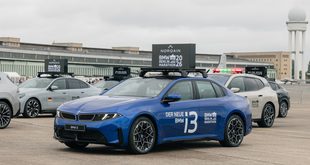
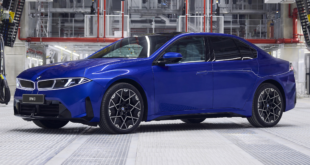
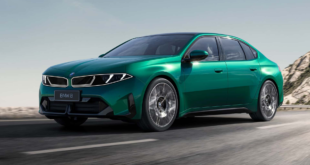
The new BMW i3 now draws its power from a factory that did not exist three years ago. BMW has officially opened Plant Irlbach-Straßkirchen in Lower Bavaria, and series production of its sixth-generation high-voltage batteries is already running. The first packs are heading straight down the road to Plant Munich, where they are fitted to the i3. Demand for Neue Klasse models has been brisk enough that the site went straight onto a two-shift pattern rather than easing in. Production chief Raymond Wittmann called the site a central platform for the German plant network, and a strong signal for Germany as an industrial base.
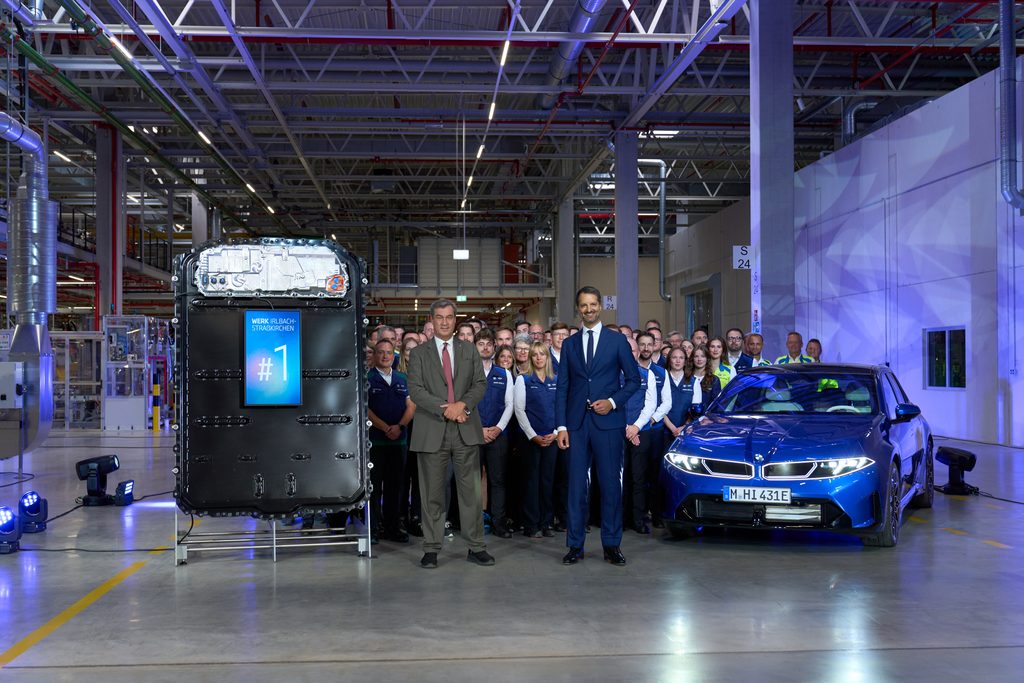
The build speed is the headline. Ground was broken in April 2024. The first pre-series battery rolled out in March 2026, under two years later. Locals had already backed the project in a 2023 referendum, with more than 75 per cent in favour on a turnout close to 77 per cent. The 60-hectare site will eventually employ around 1,600 people, turning out several hundred high-voltage batteries a day across two lines. Roughly a fifth of BMW’s global workforce now sits in this corner of Eastern Bavaria, alongside Dingolfing, Regensburg and Landshut.
The Gen6 pack itself is a clean break from what came before. Cylindrical round cells drop straight into the battery on a cell-to-pack principle, and the housing then forms part of the body structure. Around 500 robots work across 50,000 square metres of floor space. More than 3,500 data points are logged per battery in real time, with in-house AI agents chewing through the numbers to chase zero-defect output. Digital twins and virtual reality tools trained the workforce before a single unit was built. BMW has filed patent applications for over 500 innovations in this generation of its eDrive technology alone.
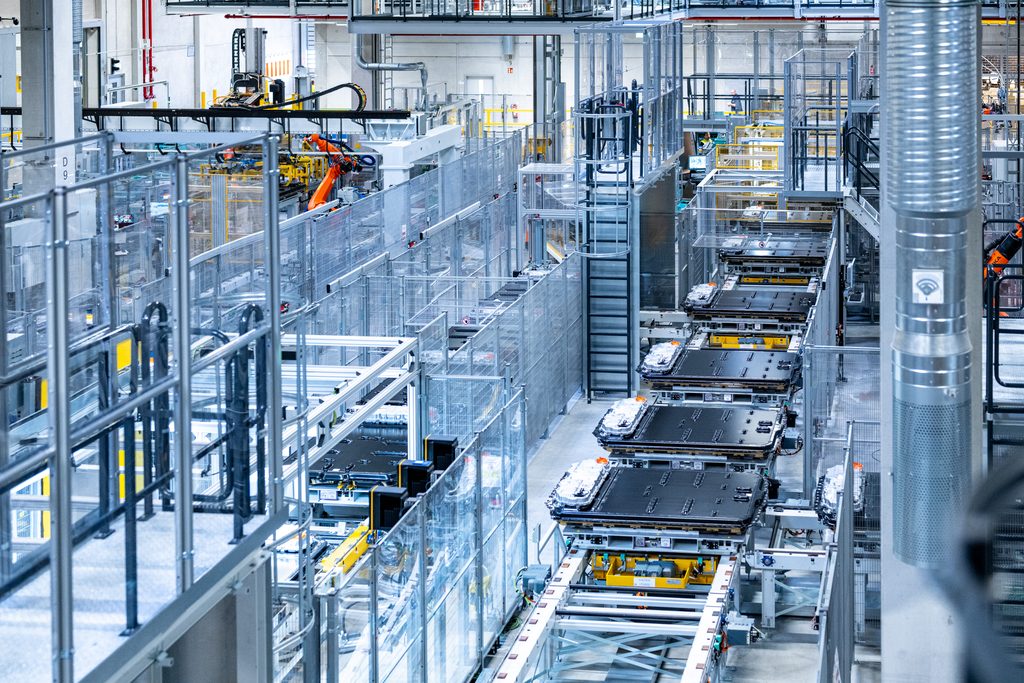
What that means for the car is substantial. The i3 50 xDrive First Edition carries a 108.7kWh battery and claims up to 906 kilometres on the WLTP cycle. An 800-volt architecture allows DC charging at up to 400kW, enough to bank 423 kilometres of range in ten minutes on a suitable fast charger. Bidirectional charging is part of the package too. The battery housing doing structural duty also tightens the body, which should pay dividends in the way the car steers and settles.
The plant runs without fossil fuels in normal operation, drawing partly on its own solar array and otherwise on renewable supply. No water is needed to assemble the packs. The cells themselves use secondary cobalt, lithium and nickel, and BMW reckons CO2e per watt-hour has fallen by around a third against the Gen5 cell. Sister assembly sites in Debrecen, Shenyang, Woodruff and San Luis Potosí follow the same local-for-local logic, keeping battery and vehicle plants close together. For Bavaria and for the i3, it is a serious statement of intent.