 BMW.SG | BMW Singapore Owners Community The Ultimate BMW Community – Established Since 2001

Getting a press car for five or six days is practically unheard of. Standard protocol gives you two, maybe three days, just enough time to log a quick commute and form a general impression. So when BMW Asia broke the mould and handed over the keys to the new iX3 for nearly a week, the message was clear: this wasn’t a routine press loan.

The rationale was simple. You cannot fully understand a machine of this magnitude from a spec sheet. While corporate boardrooms push for clinical efficiency, sanitised interfaces, and homogenised electric mobility, BMW recognised that their latest creation demands to be driven to be truly believed. A weekend spin simply wouldn’t cut it. You have to live with it, peel back the layers of its engineering, and experience firsthand how it handles the asphalt.

To understand why this car requires that kind of immersion, you have to look past the badge and straight into the monumental stakes of the development story behind it.


When BMW revived the name Neue Klasse, they weren’t just leaning on historical nostalgia for the early 1960s sedans, the lightweight, athletic cars that rescued the company from financial ruin and cemented the very definition of the modern sports sedan. They were staking the entire future of their engineering identity on a total reinvention.

Of course, massive capital expenditures are nothing new in the automotive sector; plenty of volume manufacturers throw billions at electrification. But when it is BMW making that kind of bet, it is a completely different ballgame. This is a company whose entire global reputation, enthusiast loyalty, and corporate soul are built on the purity of the mechanical driving experience.
That distinction explains the sheer scale of the undertaking: the single largest investment in the history of the company, with well over 10 billion euros poured into a completely clean-sheet architecture over a multi-year development cycle. Thousands of engineers, software developers, and designers were tasked with effectively skipping an entire generation of automotive evolution.
That capital didn’t just vanish into general research; it was aggressively funnelled into specific, high-stakes fronts. It built an entirely new production footprint from the ground up, including the state-of-the-art manufacturing plant in Debrecen, Hungary. It funded the ground-up engineering of sixth-generation eDrive technology featuring custom round battery cells that dramatically push efficiency boundaries. And it bankrolled the digital architecture, developing the advanced zonal electronic framework and the hardware-software integration for features like the Panoramic Vision display, all governed centrally by what engineers call the “Heart of Joy.”

Yet, looking at this massive lineage, a fascinating question arises: why choose an SAV, an electric mid-size crossover, to carry the absolute vanguard of the Neue Klasse into the world? The answer lies in the massive shoes left by the previous-generation iX3. Despite being built on a transitional, shared-architecture platform, that car quietly became a commercial powerhouse. It proved that BMW buyers were ready to embrace electrification without wanting a vehicle that looked or drove like a futuristic household appliance. It moved volume, secured vital market share, and established a loyal customer base that proved electric luxury could still carry a genuine dynamic pulse.
Building on that proven commercial foundation, BMW made the calculated decision to make the new iX3 the absolute spearhead of the Neue Klasse rollout. By taking their most strategically vital high-volume segment and forcing it through a total, uncompromised technical reset, they sent an unmistakable message.
When an automaker with that specific, uncompromising engineering heritage commits this level of financial firepower to a blank-canvas project, the first vehicle out of the gate has to carry an immense weight. That vehicle is the iX3. And after living with it through days of real-world integration, the gravity of that investment becomes entirely tangible. This is much more than a new model cycle. It is the definitive start of a brand-new era, and that evolution is written right into the sheet metal.
The Exterior: Monolithic Form Meets Radical Detailing
Having seen the car first at its global reveal in Germany and even walking through the production lines at the brand-new facility in Debrecen, standing on local asphalt and looking at a fully drivable, right-hand-drive example parked right here in Singapore brought a distinct feeling of surrealism. The concept had finally crossed the chasm into reality.

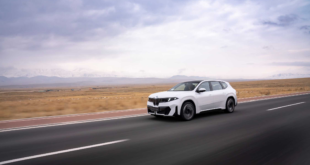
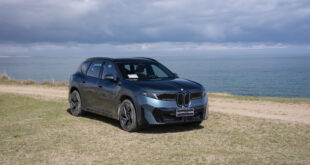
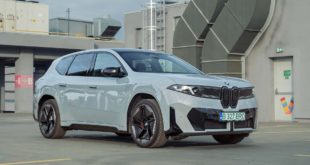
If there is one cardinal rule when dealing with modern BMW design, it is that static photographs rarely tell the whole story. Images flatten the surfacing, masking how light plays across the bodywork and robbing the car of its physical presence. Seen in the metal, the iX3 is an exercise in restraint and coherence. While it shares familiar dimensional DNA with its internal-combustion X3 sibling, the iX3 sits noticeably lower, its stance grounded and athletic rather than bulky. With clean, monolithic surfaces of metal broken up only by a few meticulously chosen lines. It looks unmistakably futuristic, yet it weaves in subtle, respectful nods to BMW’s deep design heritage.

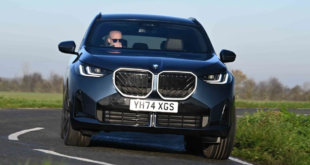
Up front, the most immediate point of departure is the kidney grille. BMW has returned to an upright, three-dimensional vertical arrangement that openly echoes the classic proportions of the 1960s Neue Klasse sedans. Flanking this are crystal-clear headlights and a completely new horizontal light signature that replaces traditional chrome trim, giving the nose an aura of quiet authority.
Look closer at the centre of the hood, and you will spot a deliberate design feature: a distinct recessed channel, a “valley” of bodywork, that flows dynamically from the base of the windshield all the way down to the top of the grille. Tucked precisely into this valley sits the brand’s brand-new logo, angled slightly more upright to capture the light and demand attention. Most people will miss the evolution of the emblem at first glance, but it marks a quiet milestone. Debuting for the very first time on the iX3, the updated roundel strips away the inner chrome ring and the dividing silver bars from the blue-and-white quadrants, leaving a flatter, sharper badge finished with a subtle satin sheen rather than stark gloss. It is a microscopic detail on a macroscopic car, yet it signals the meticulous level of thought poured into every square inch of the exterior.

That same obsession with detail extends to the profile. The flanks are smooth and uninterrupted, broken only by flush, illuminated door handles. At a glance, they function like typical electronic pop-out units that present themselves as you approach with the key fob or digital key. But pull a bit harder against the resistance, and you discover an intentional mechanical linkage, a physical cable engineered specifically for emergency scenarios. In the event of a total power cut or electrical failure, the system’s default state is to mechanically pop the handles out, ensuring you are never trapped behind digital locks when power fails.
If there is a minor gripe to be had with the initial external packaging, it rests in the paint palette. At launch, the selection leans heavily into greys, silvers, and monochrome tones, with only a single striking Fire red option breaking up the spectrum, meaning enthusiasts looking for a truly vibrant, high-impact shade might feel a bit short-changed out of the gate. That said, BMW has already confirmed that they are actively ramping up the paintshop capabilities at Debrecen to roll out an expanded spectrum of Individual hues as the production lines gather momentum.
The Interior: The Digital Paradigm Shift
Step inside, and the moment the Panoramic Vision display fires up, you realise this is entirely uncharted territory. Pictures can easily lead you to believe it is just another screen slapped onto the dash, but the actual depth of view from the projection is unmatched. It delivers deep blacks and high-contrast graphics that sit directly in your natural line of sight without obstruction.


While some rivals have decided to go nuclear on screen sizes by stacking giant, heavy tablets across the cabin, BMW has taken a thoughtful step back to entirely reinvent how drivers engage with information. It is so intuitive in action that you immediately find yourself wondering why no manufacturer thought of this earlier. Looking at a traditional digital instrument cluster buried behind a steering wheel now suddenly feels profoundly outdated.


Flanking this setup is the central touchscreen, subtly angled toward the driver as a visual nod to the iconic cockpit architecture of the E36. It is as fast and responsive as it is visually striking, running a UI that is an absolute joy to navigate. Customisation is straightforward, and there is rarely any need to deep-dive into convoluted submenus to find what you want, allowing almost any function to be pinned as a shortcut. As someone who evaluates user experience and digital architecture design by profession, discovering the nuanced details of BMW Operating System X was a genuinely rewarding exercise.
Of course, no modern interior transition is entirely without compromise. Relocating climate controls into the screen initially felt like a baffling decision, over-complicating what should be a straightforward tactile operation. Yet, after spending days with the car, the inclusion of quick factory presets and easily savable positions smoothed out some of the friction. If there is one feature I would lobby BMW to add in a future software update, it is a swing function for the vents to mimic a natural breeze motion.


The steering wheel, however, certainly demands a mental reset. Featuring a radical two-spoke layout with vertical elements anchored at the 12 and 6 o’clock positions, it breaks decades of traditional automotive interior styling. (For purists who aren’t sold on the avant-garde look, a more conventional steering wheel layout remains available as an option.) Personally, I’d take the radical design every time simply because it dares to look different. Interestingly, and more importantly, that unorthodox shape also serves a functional purpose: allowing designers to reposition the control pods slightly upward, placing them precisely where your thumbs rest when gripping the wheel at the nine and three o’clock positions.

While haptic touchpoints on steering wheels often draw valid criticism, BMW has managed to make them work better by integrating subtle contours and physical bumps into the surface. You can actually feel your way across the buttons without looking down, striking a fair compromise between visual minimalism and tactile ergonomics, all finished with beautifully backlit crystalline materials. Overhead, the expansive glass roof also initially sparked concern given our relentless equatorial climate, but its multi-layered UV-blocking technology managed to handle thermal rejection remarkably well during my time with it.
What makes this cabin even more striking is how cleanly it breaks away from the past. If you cast your mind back to the current internal-combustion X3, its interior materials and execution were, frankly, a bit of a disappointment, leaning too heavily on hard moulded plastics and underwhelming textures. The iX3 certainly changes things up. The material choices, the expansive fabric-wrapped surfaces with atmospheric ambient backlighting, and the thoughtful integration of sustainable textiles give the space a warmer, lounge-like ambience. While the materials throughout are generally high-grade, you will still spot a few sections of harder plastics along the lower trim boundaries. Still, it is an exceptional place to spend time. And given how seamlessly the new display architecture works, I have a strong suspicion that other manufacturers will soon be following BMW’s footsteps.
Under the Skin: The Gen6 Architecture and the “Heart of Joy”
If the design and interior represent the visible face of the Neue Klasse, the engineering beneath the floorboards is where the paradigm shift actually happens. For the technical purist, BMW’s sixth-generation eDrive technology is an absolute masterclass in EV architecture, abandoning evolutionary patches in favour of a wholesale reinvention. For those who aren’t interested in the geeky stuff, I’d suggest skipping this section entirely.

Ready? At the centre of it all is a massive shift in battery technology. Ditching traditional prismatic cells, the iX3 adopts custom round lithium-ion battery cells integrated directly into a pack that forms a structural part of the chassis. With a substantial net capacity sitting at 108.7 kWh, the architecture leverages an 800-volt electrical system that unlocks staggering charging speeds. The car’s architecture can pull up to a blistering 400 kW on ultra-rapid DC infrastructure, such as the headline-grabbing battery-buffered ultra-fast chargers deployed by SP Mobility and Huawei at Temasek Polytechnic. Hook the iX3 up to those ultra-rapid DC chargers capable of its peak threshold, and you can pull back between 300 to 370 kilometres of range in a mere 10 minutes.
That raw efficiency was famously put to the test when a BMW team drove a pre-production iX3 straight from its birthplace at the new Debrecen plant in Hungary all the way to BMW Welt in Munich. By prioritising eco-conscious routing and managing auxiliary loads, the team covered an astonishing 1,007.7 kilometres on a single charge, rolling into Munich with over 20 kilometres of battery to spare, shattering its already impressive 805 km WLTP rating under hyper-miling conditions. Translate that back to the real-world crucible of Singapore, dealing with perpetual ambient heat, heavy air-conditioning loads, and stop-start urban traffic, and you can realistically expect a comfortable 650 to 700 kilometres on a full cycle. In our dense, high-rise environment where charging infrastructure is always a talking point, that kind of real-world endurance completely eliminates range anxiety.
Yet, the true genius of the Neue Klasse isn’t just how it stores or feeds electrons; it’s how it distributes them. Traditional EVs rely on a fragmented web of separate electronic control units (ECUs) managing the powertrain, chassis, and safety systems. BMW swept all of that away with the introduction of the “Heart of Joy.” This is a proprietary high-performance computer that supersedes traditional dynamics management by centralising powertrain and driving dynamics control into a single, lightning-fast brain. Operating with processing speeds up to ten times faster than previous systems, the Heart of Joy coordinates throttle delivery, regenerative braking, lateral stability, and damper control simultaneously. It reads the road and the driver’s inputs with zero latency, marrying the instantaneous torque of dual electric motors with the mechanical fidelity BMW enthusiasts demand.
When you sit back and trace the depth of what went into all of this, the sheer amount of effort, time, and stubborn dedication poured into this engineering triumph proves that making an EV go fast in a straight line is easy. Making it drive like a true BMW? That seemed an entirely different mountain to climb. And perhaps the most fascinating part of all this staggering computational muscle is that its ultimate triumph isn’t something loud or aggressive. It is buried so deep in the logic that it gives you something you can’t even feel at all.
Behind the Wheel: From Local Pavement to the Bangkok Masterclass
Transitioning from static appreciation to dynamic execution on Singapore roads reveals how the iX3 handles the daily grind. The dual motor setup puts down 469 horsepower and 645 Nm of torque, translating to a zero to 100 km/h sprint in 4.9 seconds. Yet, its true party trick on the asphalt is not raw straight-line violence; it is the microscopic ballet executed by the Heart of Joy right at a standstill.

That computational wizardry manifests in the soft stop technology. The first few times you experience it, it feels almost uncanny. But once you get used to it, returning to regular brakes feels genuinely difficult. The secret lies beneath the pedal assembly, where the iX3 relies on regenerative braking for almost all of its deceleration duties (up to 98%). What is genuinely impressive is how seamlessly it is integrated, offering zero artificial stepped feeling, while the transition between regen and mechanical friction remains remarkably smooth, keeping brake pedal feel consistent and predictable throughout.


Lean into its adaptive regen drive setting, and the car takes things a step further by genuinely enabling true one-pedal driving. It reads the surrounding environment and glides the vehicle to a progressive, smooth stop without any braking intervention on your part, turning simple daily commutes into an exceptionally relaxing experience. That same underlying intelligence extends to the Active Cruise Control, which handles complete halts and pulls away smoothly the moment traffic starts moving again. While the car hardware and advanced Highway Assistant are fully capable of hands-free driving abroad, regional regulations in Singapore mean those extended hands-off features are not active out of the box just yet, though the system remains a reliable, sublime co-pilot for local traffic.


Ride comfort on local pavement is remarkably well judged. The chassis effortlessly soaks up road imperfections and sharp expansion joints, though it retains that underlying, slightly firm edge characteristic of BMWs. That balance was observed on Singapore cars running on 21-inch wheels. Step up to the optional 22-inch setup sampled during the Bangkok transit, however, and the compromise becomes more apparent, as regular street imperfections translate into a much busier, firmer ride.

While the larger rims give the car an aggressive stance, the trade-off in daily compliance is something potential buyers will want to weigh carefully against real-world road conditions.

Where the iX3 truly breaks new ground, however, is in its steering. Recent generations of BMWs have certainly earned praise for sharp turn-in and quick response, but enthusiasts and automotive geeks like us will know all too well the clinical lack of actual mechanical communication, relying heavily on artificial weight gains in Sport/Sport Plus modes rather than genuine texture. The iX3 shifts that narrative entirely. The steering remains light and effortless in daily use, yet it does a much better job of communicating what is happening at the contact patch between the front tyres and the tarmac. The heavy-handed artificial weight of previous generations has been dialled back, resulting in a slightly cleaner, more organic feedback loop that almost harks back to older mechanical setups, at times even evoking the light communicative steering feel of an old E30 I used to have.

To truly understand how this architecture handles when the leash is fully slipped, you can look to the tarmac right here at home. Even weaving through Singapore’s tighter street layouts in its sportier settings springs a delightful surprise, as the chassis allowed for a light degree of playful natural and predictable rear slip.

To see how the platform behaves when pushed further, a trip out to the Pathumthani Speedway just outside Bangkok offered a clean slate. Moving from tight arterial roads to a closed circuit was where the engineering philosophy of the Neue Klasse shifted from a comfort narrative into a proper test of high-speed stability. Out on the track, the dual-motor All Wheel Drive system bites hard, hurling the car out of technical corners with smooth, instant thrust.

What stands out most is not just the velocity, but how the chassis manages its mass. Mentally, you are always aware that you are piloting a substantial vehicle riding over a heavy battery pack, but the car handles its weight remarkably well. Through rapid directional changes, the chassis stays highly composed, the steering responds quickly, and mechanical grip remains exceptionally high. Push past those high thresholds, and the car transitions smoothly into a safe, predictable understeer, cleanly self-correcting as speed scrubs off.


The central computer coordinates damper control and lateral stability with minimal latency, successfully masking the physics of a heavy luxury SAV with genuine agility. That said, it is not an uncompromised track weapon, though. While the steering offers decent texture during normal driving, as you really push it into hard corners, its weight does not quite load up accordingly, leaving it slightly vague at the limit, making it difficult to feel precisely when the front end is starting to lose grip.
Despite that track compromise, the iX3 is a genuine privilege to pilot. If the iX3 already handles this brilliantly, it makes you wonder just how much better the upcoming Neue Klasse i3 sedan will perform once that architecture is packed into a lower, lighter, and much more intimate footprint.
The Bottom Line: A Paradigm Shift for the Luxury Segment
When you step back and look at the broader picture, the iX3’s achievement goes far beyond a single spec sheet or a successful press launch. BMW has truly raised the bar with this car. At times, it felt almost like we shouldn’t be getting a vehicle like this so soon, as it genuinely feels like it has skipped an entire generation of automotive evolution. Sitting behind the wheel, it almost evoked that exact, electric sense of wonder I felt when I first drove the original i3 in Singapore, carrying that unmistakable aura of something pulled straight from the future.

After living with the machine for a few days, the reasoning behind BMW’s generous press allocation became entirely clear. It is abundantly evident that their massive financial and engineering gamble has paid off spectacularly. The bittersweet reality, however, is that everything else on the market (including BMW’s own offerings) now feels somewhat outdated by comparison. I reckon BMW clearly recognises this shift themselves, which explains why they are aggressively rolling out over forty new variants and Neue Klasse technology-equipped versions across their portfolio over the next couple of years.
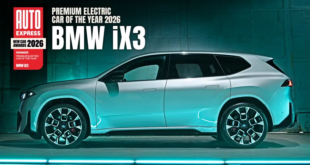
It might sound like excessive glazing, but don’t just take my word for it. The global market momentum and industry validation are already absolute. Backed by a massive wave of global enthusiasm, Plant Debrecen recently pushed past its 50,000th iX3 milestone in record-breaking fashion, marking the fastest plant ramp-up in BMW Group history, necessitating a second shift added earlier this year as orders rocket toward the 100,000 mark. Coupled with this explosive production momentum, the iX3 completely swept the international stage: from capturing the coveted 2026 World Car of the Year and World Electric Vehicle titles at the World Car Awards to being crowned Car of the Year by Top Gear and sweeping international honours like the Electric.ru EV Awards and specialised tech innovator accolades, the industry consensus is unanimous.
When an automaker with this level of heritage stakes its entire future on a total reinvention, the first vehicle out of the gate carries an immense weight. The iX3 bears that weight effortlessly. The Neue Klasse is no longer just a bold development story on paper; it is a definitive new benchmark, proving that the daring, athletic spirit which rescued those legendary 1960s sedans has finally come full circle to redefine the electric age. If this is where the new era begins, it is impossible not to look forward and wonder what comes next.