 BMW.SG | BMW Singapore Owners Community The Ultimate BMW Community – Established Since 2001

Next up, we sat down with Oliver Heilmer, Head of BMW Design for the compact class, Neue Klasse, and BMW M. This was one of the conversations I was most eager for. Design has always played a pivotal role in both my professional and personal life, and I find it endlessly fascinating — and often inspiring — to hear designers share their perspective. In automotive design, especially, where the work is as much an art as it is a craft, those insights carry a special weight.

Q: “I think one of the misconceptions we had early on was that the Neue Klasse would only apply to EVs. But we’ve since learned it’s intended to span across all BMW models. How does the Neue Klasse design philosophy translate, for example, to an M model”
A: “When you go back to the 1960s, when the Neue Klasse was first launched, it became the cornerstone for the entire BMW family. It marked a major shift — really the beginning of BMW’s success story. Later, in 1999, BMW introduced the first X5, which grew into the X family. Today, nobody questions whether it’s an SUV or a diesel — it’s simply part of BMW’s core.
That’s exactly how we view Neue Klasse. It’s not tied to a single drivetrain or body type, but rather to a philosophy: clarity, cleanness, monolithic shapes, and characterful design. From our perspective, there’s no distinction between electrified models or combustion cars. We’ve already been showing this in our current lineup.
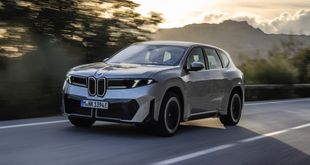
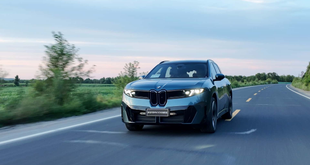
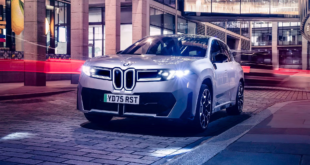
For us, Neue Klasse is about a clean yet emotional design language — strong character in the front with the new kidney arrangement, distinctive tail lights, and the panoramic iDrive. We believe this is the design path for every BMW model moving forward, not just one.”
Q: “We’ve seen a lot of the big changes coming to BMW’s EVs. But can you give us any hints as to what those changes might mean for the petrol variants?”
A: “I can say this: there will come a time when you ask yourself, ‘Is this an electric car or not?’, and from a design perspective, you shouldn’t really see the difference.
From the design side, we work very closely with the engineers at an early stage, sharing perspectives and aligning on what we want to achieve with each new model. The Neue Klasse philosophy really helped set that tone. It created a cultural shift where everyone, design, engineering, product, came together around the same goal. That’s what makes these bigger steps possible.”
Q: “What’s your favorite part of the design? I’d love to hear your take.”
A: “As a designer, I’d like to say all of it, of course. But if I had to choose, I’d highlight the subtle cues that nod back to the original Neue Klasse. For example, the arrangement of the front elements, which feels very characteristic.
I also really love the slight acceleration in the hood, or bonnet, and especially the beautiful sculpting around the wheel arches. That’s a detail I immediately want to touch — even though, with design models, you’re normally told, ‘Don’t touch, it’s just clay.’ But here, it feels so inviting and tactile, it’s one of those details that really connects emotionally.”


Q: “With the Neue Klasse program having started before your appointment as Head of Design, how much influence did you personally have on the final product? Were you involved from the very beginning, or more so later on?”
A: “Quite a lot, actually. Within the design department, all the heads of design meet weekly and share ideas, so there’s always very close collaboration across the brands. As part of that leadership circle, you’re naturally involved in every project, you ask questions, exchange opinions, and contribute especially when it comes to things like shared technologies.
For example, the development of the Panoramic Vision display was something that grew out of that circle, and everyone supported and shaped it together.
When I officially stepped into my role last October, much of the design work was already in place, but we focused heavily on refining the details, solving elements, sharpening corners, and improving quality. I even traveled to Debrecen a number of times to work through the final touches.
And looking ahead, that’s the exciting part: we’re talking about around 40 models leading up to 2027. Based on the Neue Klasse foundation, we now have the opportunity to further steer BMW’s design direction, strengthen the character of each model, and of course, carry that through to our performance cars as well.”

Q: “The name Neue Klasse is hugely important, not just for the brand, but also for the fan base. Did that create extra pressure on the design team? And how much, if at all, were you influenced by the online chatter, both positive and negative?”
A: “I can’t speak to what individual team members might read in their private time, but in terms of design development, online comments are not our reference point. Our real reference comes from structured design clinics, where we test ideas with potential customers. That feedback, along with actual customer data and sales performance, gives us the clearest indication of whether we’re on the right track. And in recent years, that approach has been very successful.
Of course, we also keep a close eye on broader external influences, big technological movements, sustainability, circularity, even trends in fashion. Those are the conversations that really matter, because they help us anticipate the future. Within our teams, we spend a lot of time sharing perspectives and discussing these bigger topics. That close dialogue is far more important than online chatter, and it’s what ultimately leads to strong, future-ready products.”
Q: “With coupes and sports cars, we see different trends across brands — some declining, some growing. Is there a clear future for those types of cars at BMW? The Z4, for instance, seems a bit uncertain.”
A: “It’s really hard to predict certain segments. Even with electrified cars, it was difficult to foresee how they would develop and evolve emotionally. From a design perspective, though, I believe BMW always needs to offer a certain bandwidth. As a brand rooted in emotion and driving dynamics, sports cars remain an important part of our DNA.
That said, it’s also a question of sales numbers — whether the demand is strong enough to justify producing these cars. We work closely with sales and marketing to track market shifts and understand where new demand might emerge. But for me personally, I think BMW should always stand for more than just one type of car. Dynamic, emotional vehicles — including coupes and sports cars — are part of what makes the brand what it is.”

Q: “Okay, I hope I’m not dragging this on (I was dragging it) but just for fun, what are your top three BMWs of all time? Or who are your top three designers?”
A: “Let me stick to the classic BMWs, not the newer ones. My picks would be:
- the 3 Series E21,
- the first M5 Touring,
- and the Z3 Coupe.
As for designers… maybe I’ll save that list for another time.”

Q: “In terms of design, what would you say is the most iconic car, off the top of your head?”
A: “That’s a tough one, because as a designer I admire many cars for different reasons. Something considered iconic to me might look completely odd or even ugly to someone else. For example, the first Renault 4 — hugely iconic, high volume, instantly recognizable — but not necessarily beautiful in everyone’s eyes. That’s what makes the word ‘iconic’ so tricky.
If I think about what really sparked my own passion, though, it has to be the BMW E21. My uncle had one, a green 3 Series with a six-cylinder engine, and I’ll never forget the impression it made on me. Compared to other cars of the time, it felt so light, so modern, with such a beautiful sound. It’s etched into my memory like it’s written on a hard disk.”
Q: “Do you have a dream project going forward?”
A: “I feel really lucky to have the chance to work on BMW M projects — that’s definitely part of my dream scope. I already have my dream projects, but M is like the cherry on top. Every time we finish a meeting on an M project, it’s always: ‘Come on, can we have it now!?!” It’s just an amazing experience.”
Q: “When someone first sets eyes on the iX3, what’s the first impression you hope they’ll have? And in terms of words, feelings, or sensations, what do you hope comes to mind?”
A: “Ideally, someone would say: ‘This is completely new, but it still feels like a cool BMW.’ That would be perfect. Being iconic doesn’t just mean including familiar design elements or symbols, the car itself has to feel iconic.
From a design perspective, that’s the ultimate goal, although it’s not something you can force. Ultimately, the customers tell us whether we’ve achieved it. We hope the impression evokes innovation, excitement, and the unmistakable character of BMW.
When it comes to feelings, a car, for example, like the i3 was extremely complex under the surface, but it shouldn’t feel that way to the driver. Ideally, the impression is lighthearted, easy to understand, intuitive, and effortless to engage with. At the end of the day, the best result is when someone says, ‘I want this. I’d love to drive it.’ That’s the ultimate measure of success for us.”


Q: “Were there any design references or sources of inspiration outside the automotive world that influenced the Neue Klasse?”
A: “When we approach a project like Neue Klasse, influences from outside the automotive industry are always present. Designers travel regularly to furniture shows in Milan, art fairs, and fashion events, all of which feed into ideas for material curation, color trends, and even technology.
For example, when we look at execution details, like the kidney grille, we study precision and craftsmanship from other fields. This could be advanced displays, fashion designers experimenting beyond fabrics, or other areas where detail and execution matter. Even the calm, clean surfaces inside the car are influenced by these disciplines, the goal is to create surfaces without unnecessary lines or distractions, just like you might find in carefully curated architecture or interiors.
Interior inspiration also comes from architecture, living spaces, and hotels. Ambient light, for instance, is crucial. You want it to feel natural and comforting, the wrong illumination would feel off in a living room, and the same principle applies inside a car. It’s all about creating a holistic environment that feels effortless and thoughtful.”
Q: “The Neue Klasse design seems to fit perfectly with electric vehicles — modern, reduced, and clean. But before this, most BMW’s EVs, like the i5, i7, and iX3, often looked like petrol cars. With the Neue Klasse, you’re introducing a distinctly electric design, yet in the future, it will also apply to combustion-engine models. How does that work?”
A: “That wasn’t our initial goal. What we focused on with Neue Klasse was reduction, cleanness, and a clear, bold character — design traits that can be applied to any drivetrain. The perception that this looks particularly suited for an electric car is understandable, but the underlying design principles will remain relevant even for combustion engines.
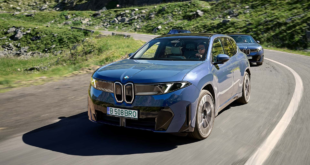
Take the kidney grille, for example. In the past, they served multiple functions, air intakes for large engines, radar placement, and so on. With improved knowledge and technology, we could reposition radar and reduce the size of the kidneys, giving the car a cleaner, more modern look. That factor of ‘newness’, visible in the iX3, will carry forward into future BMWs, regardless of whether they’re electric or petrol.”

Q: “Will the size of the kidney grille grow (again)?”
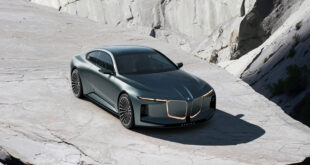
A: “The size has always been changing. Today, people often ask whether the Neue Klasse kidney design will serve as a blueprint for all BMWs. The answer is no. Vertically oriented kidneys will remain recognisable for the core models, while lower cars emphasise a more horizontal layout.
For sporty models, you can expect something different entirely, BMW isn’t about a ‘sea of sameness.’ I often compare it to a large family: some members look more like their mother, others more like their father. You can’t always explain why, but the resemblance is clear. That’s what we aim for as designers: every BMW is instantly recognisable, but each one has its own distinct character. It’s not about simply scaling the kidneys; it’s about creating identity and individuality.”