 BMW.SG | BMW Singapore Owners Community The Ultimate BMW Community – Established Since 2001

In the United States, the most wallet-friendly BMW EV is the i4 Gran Coupe eDrive40. Yet step into Europe and a different model wears that crown. The iX1 crossover slots in well beneath the i4, and in Germany, it costs roughly 15% less than the entry i4, putting it squarely against the Tesla Model Y and Audi Q4 e-tron. Oddly, BMW never earmarked the iX1 for American showrooms. AutoBlog Senior Editor Karl Furlong spent a full day behind the wheel of one in Cape Town, South Africa, to discover whether this smart little SUV could have held its own in America’s entry-level luxury EV class.
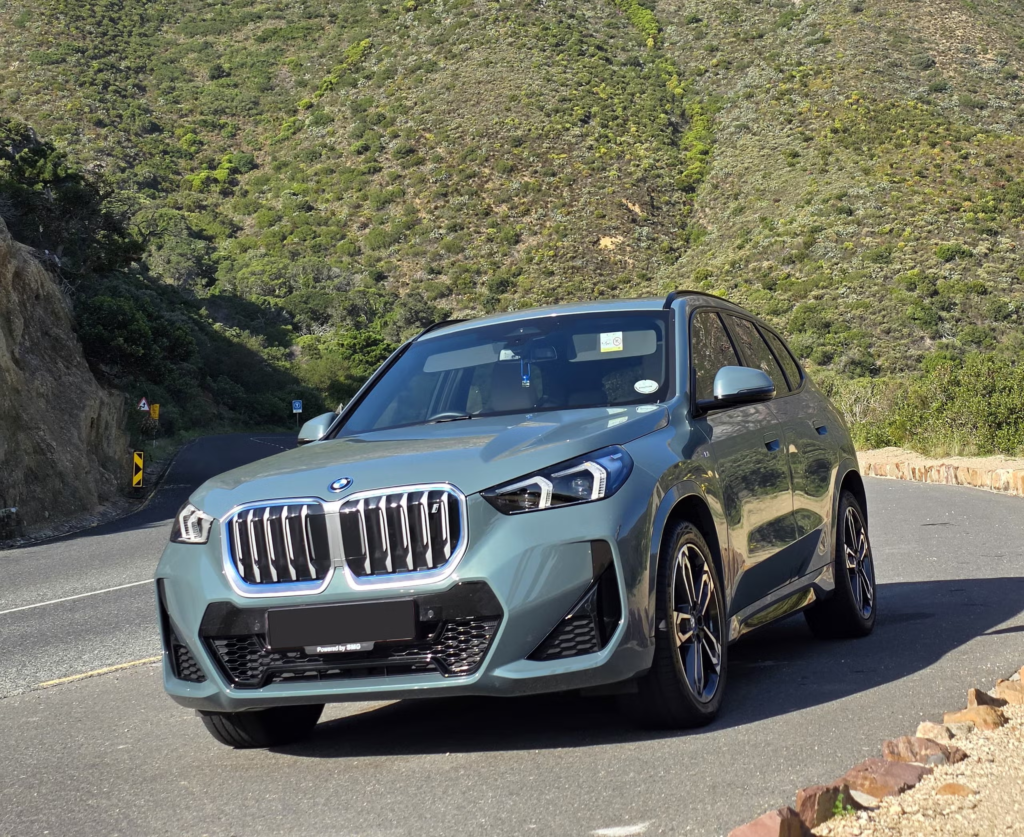
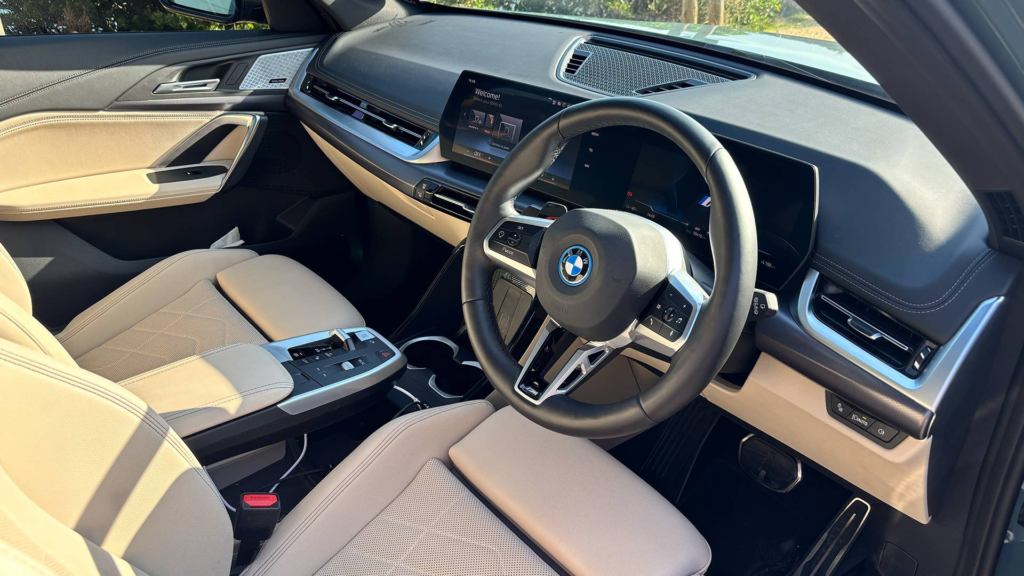
Like most BMW EVs, the iX1 borrows its lines from the petrol-powered X1, and that is no bad thing. The third-generation X1 is a crisply drawn crossover that punches above its station, free from the awkward proportions of the X3 or the swollen grille of the X7. The test car wore a handsome Cape York Green metallic finish and the M Sport Package, which brings sportier trim and 19-inch alloys. Only the iX1 badge and slivers of blue trim hint that this is the electric version. Inside, dual digital displays sit ahead of the driver, and the light Oyster Sensatec upholstery lends the cabin an airy mood. Build quality feels rock solid, with no rattles or squeaks, and elements here feel sturdier than the pricier X3. Cabin space is generous, though three adults are better served in larger BMW SUVs.
A few niggles surface, mind you. The physical iDrive controller has vanished, so most functions live within the central touchscreen. The display responds quickly with sharp graphics, but tweaking something as basic as airflow becomes fiddly on the move. The digital gauges look cooler than they read at a glance, and storage is tight, with just a shallow covered bin between the front seats. The boot holds 17.5 cubic feet, down from the 26.7 of the combustion X1, since the electric hardware eats into space, and there is no frunk. At least a powered tailgate lends a hand when arms are full.
Beneath the skin, the iX1 xDrive 30 pairs dual electric motors for a combined 268 horsepower and 364 lb-ft of torque, sent to all four wheels. A temporary Boost function, summoned via a steering-mounted paddle, frees up 308 hp for 10 seconds, handy for startling unsuspecting M3 drivers. BMW quotes a 0-62 mph dash of 5.6 seconds, nearly matching an E46 M3. At 4,597 pounds, it carries 847 lbs more than the petrol X1, yet it shrugs off that heft with instant urgency off the mark. The suspension stays firm but composed, soaking up bumps even on the larger wheels. Steering is feather-light when parking and firms up nicely at speed, while body roll stays well checked thanks to the low-slung battery.
The real stumbling block lies with range and charging. A 64.8-kWh battery sits aboard, modest by current measures, when rivals like the Q4 e-tron pack 82-kWh. BMW claims a best WLTP figure of 400 km, around 249 miles, though the sterner U.S. EPA standard would likely trim that to about 200 miles, and loading up passengers and cargo drops it further. That falls short of American expectations, where 300 miles is the going benchmark. Charging tops out at 130 kW, taking 29 minutes from 10 to 80%, whereas the incoming iX3 hits 400 kW. In the end, America’s appetite for larger, longer-legged EVs explains why BMW kept the iX1 away. Even so, it rides well, steps off the line briskly, and proves surprisingly engaging for an electric crossover. With a bigger battery and a sharper range, it would have been a worthy addition. The good news is that its Neue Klasse-based successor, due around 2027 or 2028, should iron out the range worries. The hope is that it looks and drives as well as this one.