 BMW.SG | BMW Singapore Owners Community The Ultimate BMW Community – Established Since 2001

BMW Group Plant Regensburg has clocked up 40 years of production with a fresh all-time high: 356,901 vehicles built in 2025, making it the company’s highest-volume car plant in Europe. Since opening in 1986, the site has sent around 8.7 million cars down the line, cementing its role as a major manufacturing hub for eastern Bavaria.

Plant boss Armin Ebner puts the surge down to relentless gains in competitiveness, backed by hard-nosed efficiency across the production system. Those measures have cut costs by more than a quarter since 2019, proving that high-output, high-quality vehicle assembly can still be pushed hard in Germany when the process is tuned properly.
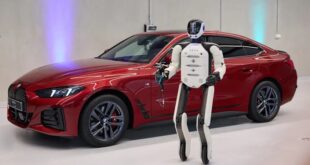
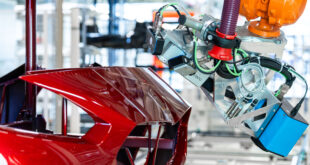
Digital tools are now doing heavy lifting on the factory floor. Artificial intelligence is used for automated surface processing in the paint shop and for quality checks during assembly, while a cloud-based traffic control system keeps parts flowing to the line. Since early 2025, newly built cars have even been able to drive themselves—autonomously and without a driver—from final assembly to the loading area.

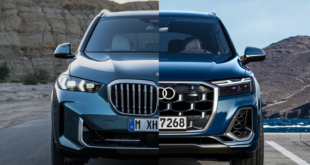
Electrified models are also taking a bigger slice of the mix, with more than 150,000 battery-electric and plug-in hybrid vehicles produced in 2025. The BMW X1 led the way with over 266,000 units, while the BMW X2 contributed more than 90,000, and the plant continues to build different drivetrains on the same line, from combustion to plug-in hybrid to fully electric.
The numbers behind the operation are just as punchy as the output: a new vehicle rolls off the line every 57 seconds, adding up to more than 1,400 cars per workday, shipped across Germany, Europe and overseas markets. What began with pledges of 400 cars a day and 3,500 jobs has grown into a workforce of around 9,000 across Regensburg and Wackersdorf, including roughly 380 apprentices—powering both local livelihoods and BMW’s broader production muscle.