 BMW.SG | BMW Singapore Owners Community The Ultimate BMW Community – Established Since 2001

The BMW 3.0 CSL and the Mercedes-AMG CLE 646 Spezialanfertigung chase exactly the same target from opposite directions. Both take a familiar coupé and rebuild it as a track-focused collector’s piece, with carbon fibre bodywork, heavy aerodynamic work and mechanical changes that run far past skin deep. Where they part company is philosophy. BMW went hunting for lightness and driver involvement. AMG went hunting for outright firepower.
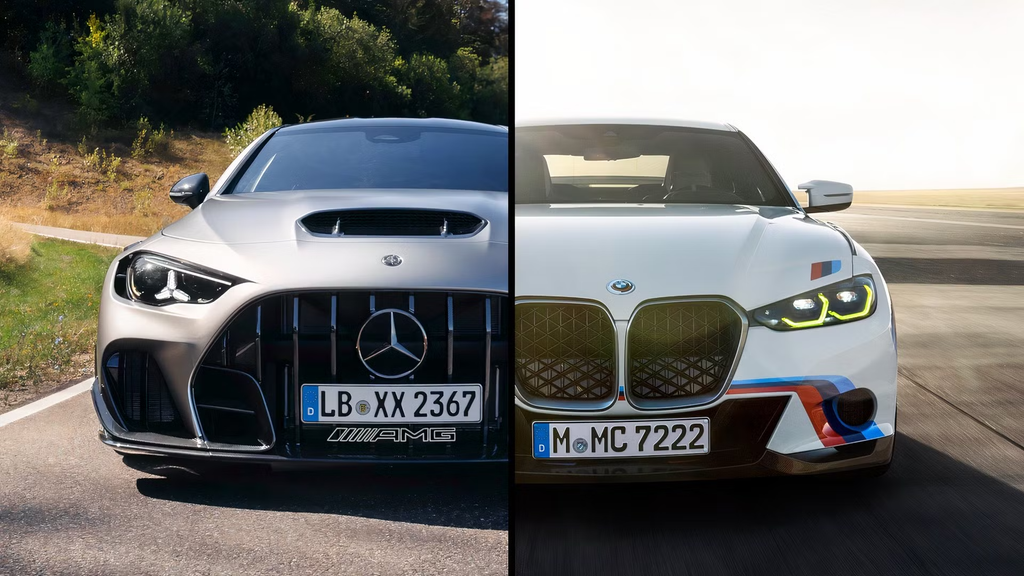
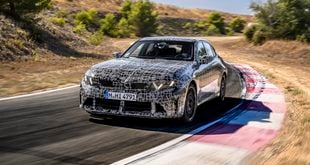
Neither car is a styling exercise. The 3.0 CSL began life as a G82 M4, passed through the harder-edged M4 CSL, then went considerably further with bespoke panels, more carbon fibre, a revised chassis and a full series development programme including crash testing. AMG started with the CLE 53 and stripped out the 4MATIC+ system entirely, before modifying the bodyshell, retuning the chassis and hand-building the result in Affalterbach. Mercedes describes it as a new performance system rather than a parts upgrade, and the work backs that up.
The engines tell the story neatly. BMW fitted a 3.0-litre twin-turbo straight-six producing 552bhp and 549Nm, spinning to 7,200rpm and packing a closed-deck crankcase, a forged lightweight crankshaft and a 3D-printed cylinder head core. AMG countered with a 4.0-litre twin-turbo V8 making 637bhp and 850Nm, using a flat-plane crankshaft to cut rotating mass and three separate cooling circuits to survive sustained abuse. Then comes the real dividing line. The BMW uses a six-speed manual. The Mercedes uses a nine-speed automatic and an electronically controlled limited-slip differential.
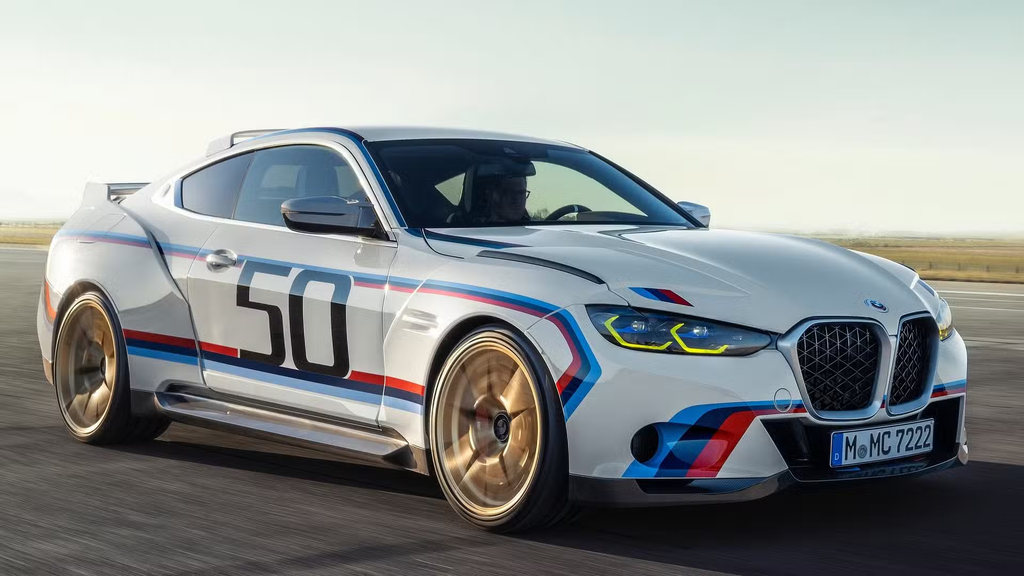
Both went after weight, but by different routes. The BMW wears carbon fibre across its roof, bonnet, boot lid, aprons and side panels, adds carbon seats, ceramic brakes and forged wheels, and swaps the rear bench for a carbon storage shelf. It lands at roughly 1,624kg. AMG binned the rear seats and their sound deadening, along with assorted comfort kit, then added carbon panels, forged aluminium wheels, ceramic brakes, lightweight glass and a titanium exhaust. That saves around 105kg, though it still arrives at about 1,895kg. BMW takes the weight contest. Mercedes takes the power contest.
Aerodynamics are where the CLE 646 pulls ahead. The BMW leans on a large side-enclosed rear wing and a deep carbon diffuser, backed by roughly 200 hours of development including 50 in the wind tunnel. The AMG answers with a manually adjustable wing, a two-position front diffuser switchable between Street and Race, vented wings, extra front flicks and a finned flat floor, generating comfortably over 250kg of downforce at maximum speed. On paper, the Mercedes wins the numbers game, hitting 62mph in a claimed 3.9 seconds and topping out at 193mph, while BMW never published acceleration figures and quotes only a top speed beyond 186mph. Power-to-weight sits remarkably close, at roughly 6.39lb per hp for the BMW against 6.47 for the AMG. Rarity is closer still, with 50 CSLs built against just 30 CLE 646s, every one of the latter spoken for before its public debut.