 BMW.SG | BMW Singapore Owners Community The Ultimate BMW Community – Established Since 2001

The transition from petrol to pixels hasn’t just changed how we drive; it’s changed how we “build.” In the golden era of internal combustion, a hot, fast Mini was a canvas. If the factory didn’t give you enough poke, a weekend in the garage with a larger intercooler, a more aggressive map, or a new Turbocharger would do the trick. We had a plethora of aftermarket options to bump up power figures as and when we pleased, chasing that perfect balance of “scary” and “sublime.”

But as we now enter the age of electrification, those tuning pursuits are becoming a relic of the past. The ideology of the “built” Mini is slowly being replaced by the “bought” Mini, where the only path to a hot, exciting electrified experience is now through official channels. So if you want the thrill now, you have to look at what the factory has cooked up. Enter the Mini Aceman JCW.
A New Philosophy of Form
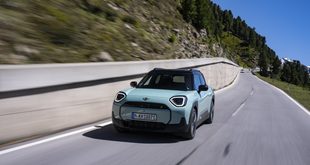
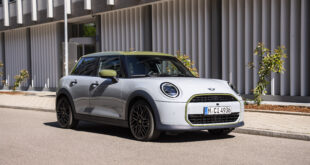
The Aceman is an interesting beast. It fills the void left by the original five-door hatch and the now-giant Countryman. While it’s undeniably a tad larger than the standard Mini, the designers have done a mighty fine job with its aesthetics. They’ve managed to carve out a balanced, angular shape that doesn’t just look “pleasing”, it’s a properly good-looking car. It has a squat, muscular stance that feels contemporary without losing that essential “Mini-ness.”


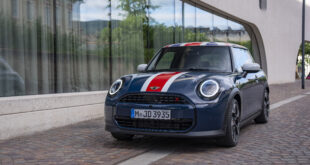
In JCW trim, that visual appeal is elevated to a riot. You get the aggressive JCW-specific bumpers, a high-gloss black grille, and those signature red accents that scream “John Cooper Works” from across the ECP. The 19-inch “Hex Spoke” wheels fill the arches perfectly, and the aero-optimised rear spoiler adds just enough “look-at-me” attitude to justify the badge.
Inner Space & JCW Flair
That larger footprint pays dividends the moment you swing the door open. The cabin is far more usable than the 3-door hatch, offering genuine utility for those of us who occasionally need to carry more than just a spare tyre.


But it’s the JCW-exclusive bits that elevate this from a standard Aceman to something special. The dashboard is draped in a unique JCW-patterned knitted textile, black with red contrast stitching, that feels tactile and modern. The JCW sports seats, finished in perforated Vescin, offer the kind of lateral support you’d want when diving into a series of bends.

I have to admit, I was genuinely surprised to find a massage function tucked away in the driver’s seat. While it certainly feels strange—almost contradictory—to be getting a lumbar rubdown in a JCW, I certainly wasn’t complaining while stuck in peak-hour traffic on the PIE. It’s a strange luxury for a “hardcore” trim, but a welcome one.


What’s impressive is how well-optioned the JCW feels overall. You aren’t just paying for a badge; you’re getting a tech-heavy cabin that includes a crisp Head-Up Display, an augmented reality navigation system, and a 10-speaker Harman Kardon sound system. It feels like a premium space that could very well justify its COE-heavy price tag.

Everything we’ve talked about is well and good, but now we must dive into what matters most in every Mini: the drive.
The Mario-Kart Reality
Let’s be clear: the ride is on the firm side. This isn’t just a byproduct of being an EV; it’s by design. The JCW features a bespoke sports suspension setup with specifically tuned springs and dampers, sitting lower than the standard Aceman. They’ve even dialled in increased camber angles on the front wheels to sharpen the turn-in, a nod to those of us who appreciate a car that points exactly where you tell it to.

That slightly compromised ride translates into a car that is incredibly nippy. With 255 bhp (190 kW) and a healthy 350 Nm of torque available instantly, the Aceman JCW is no slouch. It’ll crack the 0-100 km/h sprint in 6.4 seconds. While that might not sound “hyperspace” fast in the EV world, it’s the way it delivers it, punchy and immediate.

Flip it into “Go-Kart Mode” and the car comes alive. The steering weighs up, and the car amuses you with synthetic “pops” and spacey burbling noises. There’s even a dedicated “Boost” paddle behind the steering wheel; pull it for 10 seconds, and the car sharpens its reflexes for maximum overtaking prowess. It’s a digital thrill, a physical mimicry of the theatre we used to get from a tuned exhaust.
The Realities of Juice
Now, while technical talk about batteries might feel a bit boring, it’s the price we pay for this new performance era. The Aceman JCW packs a 54.2 kWh battery, giving you a WLTP range of about 355 km. In a Singapore context, that’s roughly a week of driving to and from work with a weekend jaunt to Dempsey thrown in.

When you do need to juice up, it supports 95 kW DC fast charging, which gets you from 10% to 80% in about 30 minutes. Enough time to grab a kopi and a quick snack before you’re back on the road.
The Missing Theatre
However, as someone who grew up with the raw, unpolished character of classic JCWs, I found myself wanting more.

Specifically, I wished for more customisation of the driving sounds. I really wanted to “turn it up” even further, to make it louder and more aggressive. JCWs were always about the theatre, the drama of the downshift, the burble on the overrun. On its recent outings, that theatre has felt somewhat lacking. Even with those massive JCW Sport Brakes biting hard into the corners, the auditory experience doesn’t quite match the physical deceleration.
My biggest gripe, though, is the lack of differentiation. Using the same digital sounds as the non-JCW Minis means the Aceman JCW doesn’t quite “feel” as exclusive as it should. Mini needs to create JCW-exclusive acoustic profiles and “moods” to really bump up the appeal. Without that unique digital DNA, it risks becoming just a slightly totted-up Cooper S rather than a true performance halo.
The Verdict: A Crowded Grid
The Mini Aceman JCW is a fantastic-looking, highly capable evolution of the brand. It proves that the factory can still build a car that handles with the best of them. But the playground is getting crowded. With each passing day, the segment is becoming a battlefield, and the “official channels” aren’t just occupied by the traditional Europeans.

We are seeing a wave of fully specced-up Chinese EVs, like the Smart #1 Brabus and the Zeekr X, eyeing the Mini’s pie with aggressive intent. These rivals often offer significantly more raw power (sometimes over 400hp) for a lower price tag, wrapped in tech that rivals the best from Munich.
As we move away from the era where we could “build” our own excitement through aftermarket tuning, choosing our own cams and tweaking our own maps, the pressure is on Mini to deliver that raw, unbridled soul straight from the showroom floor. The Aceman JCW gets us 90% of the way there. It’s a polished, potent, and practical way into the future. Now, Mini just needs to turn the volume up to 11 to give us back the riot we used to build for ourselves before the competition captures the crowd.