 BMW.SG | BMW Singapore Owners Community The Ultimate BMW Community – Established Since 2001

Nikko, a place where history, nature, and spirituality converge with rare intensity. Tucked deep into the mountains of Tochigi Prefecture, it has long been revered as a sacred retreat, drawing pilgrims, nobles, and travellers for centuries. At its heart lie the lavishly adorned shrines and temples of Nikk? T?sh?-g?, the final resting place of Tokugawa Ieyasu, whose legacy helped shape Japan’s Edo period.


Towering cedar forests surround these sacred grounds, their quiet presence amplifying the sense that Nikko is not merely visited, but experienced. Beyond its shrines, Nikko’s significance extends into the landscape itself. Waterfalls, mountain paths, and winding routes have historically guided worshippers and merchants alike, transforming the journey into a ritual as meaningful as the destination.


Unfortunately for me, as the day wound down and the sun edged toward the horizon, I found myself threading past tour buses and rental cars full of wide-eyed sightseers, all dutifully absorbing Irohazaka’s breathtaking mountain passes, at speeds better suited to contemplation than driving.

It’s difficult to fault them, though. While I use the word breathtaking to describe Irohazaka’s roads, it hardly feels sufficient, ? roads like this defy easy labels. And while Mt. Haruna and Mt. Akagi each delivered unforgettable drives, journeys well worth the pilgrimage for any petrolhead, Irohazaka revealed itself as something altogether rarer, existing on an unexpectedly higher plane.

If Haruna and Akagi awaken the desire to visit, Irohazaka plants a quieter, more dangerous thought: the wish to stay. Even crawling along at a snail’s pace, I could feel the rhythm of the road, each bend flowing seamlessly into the next with a natural, hypnotic grace.

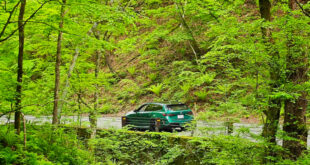
Its twin ribbons of asphalt coil relentlessly through the forest in a sequence of numbered hairpins, each corner stacking anticipation upon the last. Cedar trees rise on either side, their height and density lending the route a cathedral-like stillness. Unlike the passes I had driven earlier that day, Irohazaka distinguishes itself with separate routes for ascent and descent, allowing the drive to unfold without the constant worry of oncoming traffic, or the ordeal of negotiating the succession of speed bumps now installed on both Haruna and Akagi. I had to return.


I had to return. And so I did, hauling myself out of bed the very next morning at a decidedly un-vacation-like 4:30 a.m. Yes, the sun way already on its way up.


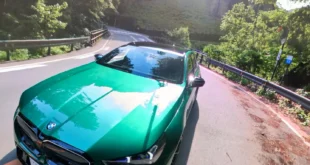
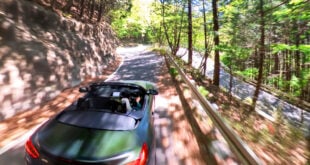
With nary another soul, or car, in sight, the entirety of Irohazaka was mine to soak in and truly experience. With a Z4 M40i at my command, it was, put succinctly, pure euphoria. High-speed bends, tight hairpins, wide-open climbing sweepers, everything was here.


With each passing corner, the Z4 pushed on with unrelenting vigor, its howls and barks from the magnificent B58 echoing off the mountain walls. The chassis, once adept at cruising these same roads just a few hours earlier, now communicated its intentions with remarkable clarity the more I engaged with it. There was even a cheeky wiggle of the rear end from time to time, but never once unexpected.


As you might expect, piloting such a machine on roads like these is an addictive combination.


With the morning still fresh, it only made sense to rewind, revisit, and run this sublime stretch a few more times, up until my petrol warning started flashing. I quickly learned that gas stations in this part of Japan don’t open until much later in the day, which meant a very sedate drive back to the hotel for breakfast, begrudgingly executed in ECO PRO mode.


The much more relaxed pace back, however, allowed my thoughts to finally catch up. Having already sung numerous praises about the Hakone Turnpike after previous drives, Irohazaka certainly feels right up there in terms of driver exhilaration. While it might not allow for the same rapid speeds as the Turnpike, Irohazaka excels with its more technical sections, and with no opposing traffic to worry about, it undeniably raises the ante in terms of sheer driving pleasure.


With breakfast settled, souvenirs acquired and the Z4’s tank filled with high-oku, it was now time to return to the city.

With the mountains behind me and Tokyo ahead, the roads of Haruna, Akagi, and Irohazaka lingered long after the drive ended. From Haruna’s intimate hairpins, to Akagi’s sweeping climbs, and finally Irohazaka’s cathedral-like rhythm, each pass offered a lesson in precision, patience, and pure driving pleasure. Behind the wheel of the Z4 M40i, it all felt even more vivid: the howls of the B58 echoing off the mountains, the chassis communicating with every input, making the car feel alive in a way that made every corner a conversation.

There’s a deeper resonance here, too. For me, the Z4 isn’t just any car, it was the first BMW I ever test-drove as an automotive writer, a moment that sparked countless drives and built an even stronger love for the brand. Now, with its production ending next year, it feels poignant, almost poetic, that the Z4 would carry me through some of Japan’s most legendary roads. The thrill of motion, the harmony of machine and mountain, and the echoes of the AE86 in Initial D all converge here, in a fleeting experience that I know I will never be able to replicate. By the time Tokyo’s skyline emerged, it was clear: this drive wasn’t merely about roads, or speed, or skill, it was a quietly perfect circle, from first to last, stitched together by the joy of driving and the joy of machine. Thank you, BMW Japan.