 BMW.SG | BMW Singapore Owners Community The Ultimate BMW Community – Established Since 2001

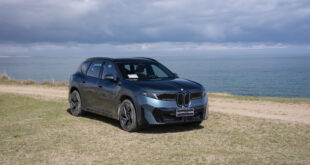
A last-minute regulatory curveball has forced BMW to rethink one of the standout design details on its Chinese-market BMW iX3. When prototypes first surfaced at the start of the year, they wore the same sleek flush door handles as the global model. That is no longer the case. A new Chinese regulation taking effect on 1 January 2027 bans pop-out door handle designs on new vehicles over safety concerns, and rather than waiting until the 2029 compliance deadline for models already approved, BMW has opted to make the switch before the car even reaches showrooms. The electronic pop-out units are gone, replaced by a more conventional pull-up design that appears to be borrowed from existing models like the combustion-powered X3.

The Chinese-spec BMW iX3 is not simply a global car with different handles, though. BMW has stretched the wheelbase by 108 millimetres to 3,005 millimetres, resulting in noticeably longer rear doors and a slightly more generous greenhouse. It is a formula the brand has used successfully in China for years, where rear-seat space carries serious weight with buyers. At the back, an updated roof spoiler now integrates a central camera that feeds the car’s advanced driver assistance systems, developed in partnership with Chinese autonomous driving specialist Momenta. The long-wheelbase variant will make its first public appearance at the Beijing Auto Show next month before deliveries begin in the second half of the year.
On the performance and range front, BMW quotes some impressive headline numbers, though they come with a caveat. The Chinese iX3 reportedly covers over 900 kilometres on a single charge, comfortably surpassing the global model, but that figure is measured on the locally applied CLTC cycle, which is known for producing more generous results than WLTP or EPA testing. Charging speeds look genuinely rapid, however. The car supports 400-kilowatt charging and can replenish the battery from 10 to 80 per cent in just 21 minutes, with roughly 10 minutes enough to add over 400 kilometres of range on paper. BMW has not confirmed the battery capacity, though it is unlikely to stray far from the 108.7-kilowatt-hour net figure found in the standard-wheelbase car.

At launch, China will receive the iX3 50 xDrive with a dual-motor setup, mirroring the global rollout. Combined output has not been officially announced, but it should sit close to the 463 horsepower and 645 Newton-metres available in the shorter car. The stretched wheelbase is likely to add a touch of extra kerb weight beyond the European model’s 2,285 kilograms, which may have a marginal effect on acceleration and handling sharpness. For reference, the standard car covers the sprint to 100 kilometres per hour in 4.9 seconds before hitting an electronically limited top speed of 210 kilometres per hour.
It is worth noting that the long-wheelbase iX3 will not be a China-only affair. BMW plans to sell it in at least four other markets, including India, Thailand, Indonesia and Malaysia, which suggests the pull-up door handle design could become a familiar sight across much of Asia. Given the timing of the regulation, it seems likely that BMW’s upcoming long-wheelbase i3 saloon for China, expected in 2027, will also arrive without the flush handles that define the global car. For now, all eyes turn to the Beijing Auto Show on 24 April, where the full production specification should finally be laid out in detail.